- English
- Italian

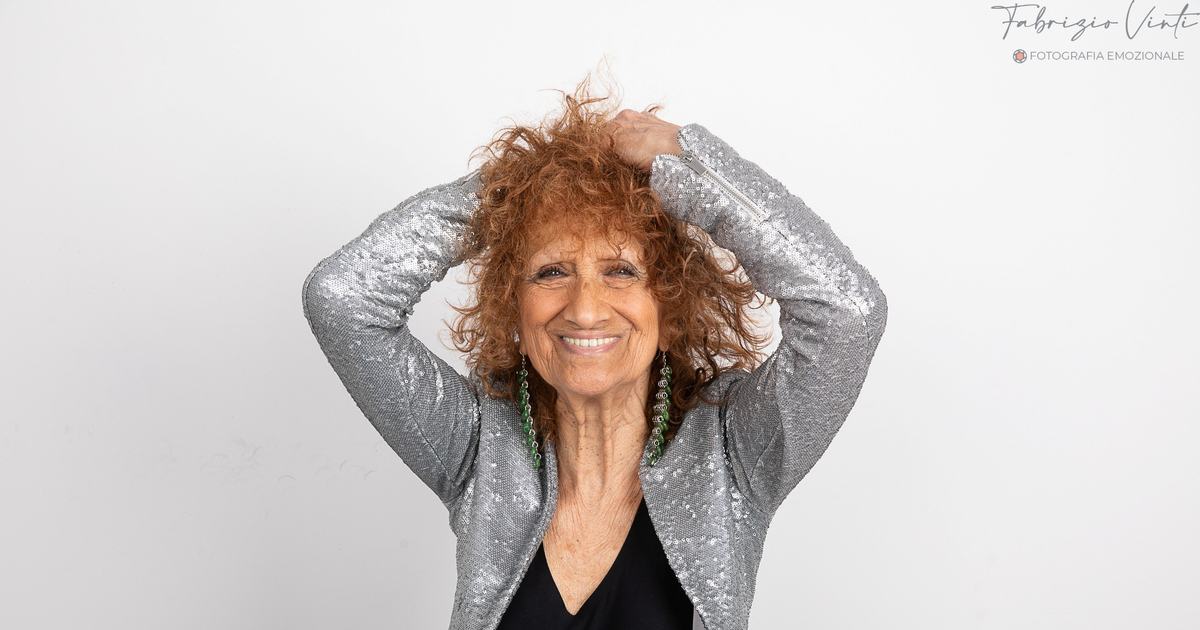
Rossella Erra entered the homes of Italians as the “voice of the people” on Dancing with the Stars. She does not come from the entertainment world, but from real life. For over twenty years she worked as an accountant and economic consultant, after earning a degree in International Trade Economics and Currency Markets. A solid path, far from the spotlight, abruptly interrupted by an extremely difficult personal phase: the closure of her business and the illness, then the loss, of her mother. From that moment comes an unexpected, almost accidental turning point that brings her to television as a speaking member of the audience. From then on, her presence becomes recognizable, divisive, and impossible to ignore.
In recent months that voice has been exposed without filters: judgments, attacks, labels. A public shaming that has gone beyond the boundaries of the show and slid into a far more slippery and dangerous territory: the body, origins, character, the very right to belong. Rossella Erra thus becomes one of the most emblematic faces of a television landscape that demands authenticity.
And this is precisely what makes her relevant today. Rossella Erra is a non-traditional television figure: she does not play a scripted role, but brings a voice perceived as authentic; she generates consensus and debate in equal measure; she becomes part of a broader narrative that tells the increasingly fragile relationship between television, public opinion, and judgment.
This interview begins there. But it does not remain there, because Rossella Erra is not only the face of a controversy, nor a divisive character: she is a woman who has lost everything, who has stood back up, who has learned not to lower her head anymore. A woman who speaks about work, motherhood, pain, roots, and television as a human place before it is a media one.
This is not a defensive interview. It is a story that goes beyond. A dialogue that chooses to move through the public uproar to reach the person, because when a woman begins to tell her own story, the only thing left to do is listen. And listening, in this case, means letting her speak.
Rossella, in December Dancing with the Stars came to an end, a show where exposure is total. Do you think part of the hatred you faced during the broadcast has to do with not fitting into an “acceptable” idea of a woman on TV, even in terms of body and origins?
— When they tell you “you’re fat,” you immediately understand that the problem is not what you do, but what you are. There is still the idea that only women with a certain kind of body should be on television, as if a person’s value passed first through their body and only afterward through what they say or represent. But television, like the working world in general, should reflect reality: made up of different people, different bodies, different stories. Everyone has the right to be in a space, regardless of their body. In my case, hatred also added another layer: the one tied to where I come from. Being Neapolitan becomes a label, and then words like “vasciaiola,” “vrenzola,” “vulgar,” “trash” start coming. It’s a judgment that no longer concerns a choice or a TV role, but an alleged cultural and regional inferiority. Body and origins blend together, and at that point you completely lose contact with the reality of facts. The hatred that erupts becomes a real emotional bomb: it can overwhelm you, even if you are a strong person, even if you think you are prepared. But at a certain point you have to make a choice: either you stay there feeling bad, or you react. I chose to react, to hold my head high, and to remember that the real difficulties in life are elsewhere. And above all, if a decision truly reflects who you are, you have to carry it forward all the way. That’s what I did.
We all witnessed the public shaming that erupted against you. When social media turns violent, it can truly hurt and even lead to tragic consequences. You are a strong person and you managed to react, but not everyone has the same tools. Do you think today we underestimate the real weight of online hate?
— After almost ten days I was truly worn down. At first I reacted, but then fatigue sets in. And there is something I want to say very clearly: in this whole situation there was a deeply one-sided dynamic. In the matter of the tesoretto (in the Italian version of Dancing with the Stars, a special bonus called the “treasure” can be assigned by the jury. It allows a contestant to gain extra points or advantages that can change the rankings and keep the competition open until the end), for example, if I had given it to Francesca Fialdini, probably nothing would have happened. It would have been considered a “natural” choice, and no one would have complained. Instead, I decided to make a different choice: I gave the tesoretto to the person at the bottom of the rankings precisely to keep the game open, to give one more chance. And then I ask myself: why should I have been forced to give it to Nancy Brilli and not, for example, to Paolo Belli? What was the unspoken rule I was supposed to follow? I made a choice in good faith, respecting my role and the spirit of the game. And what struck me most was not the criticism itself, but the disproportion: the fact that everything, suddenly, was directed only at me.
A phrase of yours struck me deeply: “in my previous life I had to endure, to put up with.” What exactly were you referring to? Were you talking about a work context, a personal one, or a way of being in the world that you feel you have overcome today?
— Yes, I was referring to work. For twenty years I was an accountant: I taught professional training courses, I worked in a partnership, I had a business partner. But our ideas were not always aligned. At a certain point our professional life together ended, also because in the same period my mother became seriously ill. There were choices I did not agree with and that I could not fight against, because I was engaged on a much more important front: the human one. What I call “the previous life” ended all at once: professionally and personally. With my mother’s death I also discovered many things I did not agree with. In that period I always said yes, I lowered my head, I allowed myself to be humiliated as a professional. After hearing over and over “you can’t do this anymore,” “you’re no longer capable,” I ended up believing those words. I questioned my professionalism and myself because I was in such a weak moment that I couldn’t react. And that must never happen again. Today I rebel. I don’t want people who threaten me, who make me feel inferior, who demean me. I’m tired. That’s why, when I’m on Ballando, when I’m on television, you sometimes clearly see this rebellion in me: because if I had endured everything without learning anything from my past life, it would mean I understood nothing. When today someone tells me “you have to leave television,” I answer no. It’s not right. I have already lost a job, and I lost it with devastating consequences for my private and professional life, staying without work for a long time. And so no, it must not happen again. Not in the method, and not in the way. This year, moreover, so many false stories were spread about me through articles that claimed “very reliable sources.” Completely invented stories: that I went secretly to Ballando con le Stelle to record videos and then sell them, even involving Caterina Balivo. That production had reprimanded me several times, that the entire editorial team was against me, that there had been meetings against me. Are we joking? Do you really think Milly Carlucci would watch me do such things and say nothing? The problem is that people read these things and think, “Ah, you see, she does it because she likes gossip.” It’s easy to shoot at the Red Cross, to think “who even is this Rossella Erra.” But today I no longer lower my head. I can’t anymore. And I don’t want to.
In light of everything you have lived through, if you could speak today to the Rossella of a few years ago, the one going through the darkest period, what would you tell her? With the human baggage you have now, what advice would you have wanted to give her?
— I would tell myself this: when you leave the hospital and you cry, keep crying. Cry alone in the car, don’t hold back. But know that afterward there will be a way out. Hold on. Keep crying, because somewhere a new road will open. You need patience, a lot of patience. It will take time, but in the end you will manage to stand back up. The people who hurt you will drift away on their own. Don’t wish harm on others, don’t seek revenge: life will go on anyway. And the most important thing is that life will go on for you.
Rossella, when you cry… where do you cry?
— Do you know what is really happening? In this period I have been crying a lot, even on television. It happens on Dancing with the Stars, it happened with Caterina too. Because I can’t separate my private life from my television life. When I’m on Dancing with the Stars and I listen to the contestants’ stories, I often see pieces of my own story inside me. And so I feel compelled to share that same pain, or that same joy, depending on the case. I try to resist, but then I burst into tears. So much so that someone on the jury says: “She cries all the time.” What they perhaps don’t understand is that, for me, television has always been a release valve. Exactly like home used to be. Every time I cry, thanks to a clip, a word from Milly, a precise moment, I am letting go of a piece of my past pain. Even today, when I watch television, it happens to me. I think of The Voice Kids, the children, but also the seniors. When I see Antonella interact with them with that gentle, maternal delicacy, I feel deeply moved. I get emotional, I cry, sometimes even intensely. And then afterward I feel relieved. For many, crying is a sign of weakness: “My God, she always cries.” I don’t care. Because through that crying I am releasing something that for too long I kept inside and could not let out. I prefer to let it go like this, with tears. In those moments, the embrace I see on television is as if I were giving it myself. It represents that good side of TV that isn’t always there: that hand someone offers you. Even when no one turns around, someone stays there beside you, as an assistant, as a presence. It’s that hand that says: “Wait, you’re not alone.” Unfortunately, in real life it’s not always like that. In my past I didn’t have that hand. I was left alone. And that’s why I changed. My past taught me how I must be today, how I must act. Because if you keep making the same mistakes, it means your past has taught you nothing.
In recent months we have witnessed terrible femicides, such as the case of Federica Torzulli. You are a public figure, but first of all a woman: is there a story that struck you in a particular way, while knowing that every femicide is devastating? And if you feel like saying it, is there something you would like to add?
— At the end of December I was deeply shaken by the story of Anna Tagliaferri, from Cava de’ Tirreni. I knew Anna through a mutual friend and would occasionally go to her bar. At Easter she had given me one of her cakes. She was a forty-year-old woman, radiant, with an incredible sweetness. About a year and a half earlier she had reconnected with a former school friend and they had started dating. A couple that, from the outside, seemed calm. Then, suddenly, we woke up to the news that he had killed her with a knife, had tried to kill her mother too, and then threw himself from the top floor. When something like that involves a person you have known, someone you know what they were like, the shock is devastating. Knowing she is no longer here, no longer having the face of that woman so sweet and beautiful, especially for those who were close to her every day, leaves you with an enormous sense of helplessness.
Let’s talk about childhood. Is there a memory from when you were a child that you feel you still “wear” today?
— My strongest memory is tied to the house in Lago Laceno, in the mountains. There were two villas side by side: one was ours, the other belonged to my uncles. And that, for me, was truly the meaning of family. Me, my mother and my father; next door my uncles, my cousins, the little nieces. All together. I remember bike rides, me playing with mud and pretending to run a restaurant. I remember my mother preparing food and all of us eating together on a big wooden table built by my father. My father playing cards with friends, my mother playing rummy. Me with the daughters of my mother’s friends. We grew up there. And then winter, snow. All together with a sausage sandwich or hot chocolate, sledding, laughter. Those are the memories of my childhood, because that is where my family was. Unfortunately, very little of that family is left. Life took them too soon. And that taste, that scent of family… I miss it so much.
How much harder has it become today to be a parent, also because of what kids can suffer on social media?
— Today the family has an extremely difficult task. In the past there were certainly hardships and battles to face, but people spent much more time together: there were fewer distractions and, perhaps, less cruelty in the world. Today being a parent has become truly complicated. On top of the usual difficulties, there is what a young person can suffer every day through social media: comments, judgments, bullying. It is an enormous burden to manage, both for children and for those who try to protect and guide them as they grow.
Speaking of media witch-hunts, I’m also thinking of the Signorini case. Aside from the judicial aspect, which rightly belongs to the courts, there has been an extremely intense media exposure. Do you think this kind of public shaming can have very serious consequences, even putting people’s lives at risk?
— Do you realize that, in my small way, the media witch-hunt that hit me was enormous. And the most serious thing is that those who feed this mechanism often don’t realize the responsibility they carry. You throw out a word, a judgment, and then you move on as if nothing happened, as if everything will always go smoothly. That’s the problem: you never stop to think about the consequences. About what a public shaming can cause, even when it hits someone who may not have the tools to withstand that blow.
One of the biggest problems is that even when you decide to report the so-called keyboard warriors, the justice system moves very slowly. It can take years. But that should not discourage anyone: reporting is essential, always. It is the only way to place a barrier against a mechanism that otherwise continues undisturbed, and to affirm that hatred cannot remain unpunished.
— Yes, you have to report them. I truly understood it during Dancing with the Stars, and even more during the Christmas period. On the 24th, 25th, 31st and January 1st, people kept insulting me under my posts. Whatever I posted, even a simple Christmas greeting, insults came. At a certain point I thought: enough. Really, enough. Beyond the fact that some people evidently don’t have a life of their own, what is striking is seeing how much cruelty is poured out precisely on days that should be dedicated to something else entirely. It’s a hatred that never stops, that feeds itself. I am nobody, and in my small way I can do very little. But I want to try to stop this wave. Not because I don’t want it directed at me, but because I don’t want it directed at others. It must not be allowed. Because if you keep tolerating all this, it will never stop.
If today you had in front of you those who hated you, those who insulted you on social media, what would you say to them right now?
— Maybe I have understood one thing: I wouldn’t even waste my breath. When someone decides to hate you, no matter what you say or do, you will always be that person to them, the one to be hated. They will never believe you. And so I asked myself: why should I stand there trying to change the mind of someone who speaks badly of me without any hesitation? For what? It also happened recently. I was at an event, sitting next to a woman. As I passed her I politely said: “Excuse me, ma’am, I’m a bit bulky.” She replied: “Yes, indeed, very.” At first I thought she was joking. Then, during a break, I stood up to leave and said, still smiling: “Sorry if my belly bothers you.” And she replied: “Well, everyone in life gets what they deserve.” That sentence shocked me for its cruelty. At the end of the show, as we were leaving, I heard her say to the person next to her: “There’s nothing to do, I just can’t stand her.” At that moment I wanted to go back and say: “Ma’am, who gave you all this familiarity?” Then I stopped. And I understood something: that evening I enjoyed myself. She didn’t. She spent her time poisoning herself, thinking about me instead of living her night. I was there, sitting next to her, and for me that was the worst punishment she could have. It’s the same with haters on social media: replying would mean giving them importance. I choose to live. And in the end, believe me, it’s always the one who hates who loses.
In all of this, your more rational side also emerges. You have a degree in Economics: do you think that background helps you, especially under stress, to make more clear-headed decisions?
— It’s a rationality I have acquired in recent years, because I have extremely strong emotions. It’s an emotionality I had to educate, precisely through rationality. It’s not natural for me; it’s work I do on myself. And sometimes that rationality leaves me and the more emotional side comes out, as happened on Ballando, where sometimes I lose patience. Then come the labels: “the screamer,” “the vulgar one.” But it’s not like that. On television there are people who shout much more than I do, often without any reason. If I raise my voice, I always do it in defense: in defense of myself when I’m demeaned or humiliated, or in defense of others, the contestants. Never for the sake of it. This awareness is something I have developed precisely in recent years, since I’ve been on television: learning to understand what the priorities are and, above all, to read other people’s emotions. When an adult behaves aggressively or condescendingly toward someone they don’t know, that says much more about them than about me. It reveals their smallness. And then I ask myself: why should I give that so much weight? In the end it’s not much. I send them a big greeting and wish them to enjoy life. I move on with mine.
Caterina Balivo and Milly Carlucci are two very different women, but both central to your journey. What have they taught you, humanly?
— Caterina, even today, is the person who gives me many pieces of advice, both personal and professional. Small advice, even related to health. She has been a real support. She knows what happens in my life and she was the person who held me in the lowest moment. That is something I will always carry inside. When she tells me “Come on, Rossella,” “don’t give up on your diet,” “add a bit of movement,” she could easily not care. But she does: she truly cares. And I chose her as my anchor. In the moments when I’m down, when I feel like I could eat the whole world, I immediately write her a message. She understands right away and she replies. She is a presence that accompanies me in life. Milly, on the other hand, represents the most emotional and human part of my journey. She is the one who took my hands and said: “Come to Dancing with the Stars, so you’ll feel your mother closer.” She knew how much my mother loved Dancing with the Stars. And those hands, for me, were my mother’s hands. When Milly turns and looks at me, when she says a word to me, it’s as if my mother were speaking to me. I can’t say Milly replaced my mother, and I would be ashamed even to think it. But she is that maternal voice I miss profoundly in life. Because I miss my mother so much. And Milly, for me, is that maternal caress, that pat on the shoulder, that I sometimes need.
From up there she watches you, and I’m sure she is proud of you.
— I’m certain my mother has seen all of this, from up there. And I often think how beautiful it would have been to bring her to Dancing with the Stars. I imagine her there, happy. And my father would have been incredibly proud too. He was a military man, an Army general, very strict. But he loved television as much as I did: we watched it together. For him it would have been a great pride to see his daughter on television. I know he would have been deeply proud.
When you are on Dancing with the Stars, do you feel their hand is still there?
— Yes, I feel that hand. And I have found reference figures. I don’t like to say “substitutes,” because no one replaces a parent, but people who have become important supports in my life. I found them certainly in Caterina and in Milly. I experience television in this way, in a very human way. And then there is Mara Venier. With Mara, one look is enough: we experienced something similar with our mothers, a common illness, and she understands me without words. When I go to her, we’re sitting there and she looks into my eyes, comes close, hugs me and says: “You’re thinking about her.” I don’t know how she does it, but it gives you chills. Then there are other people who have been fundamental for me. One is Massimiliano Orsini. When I met him on Dancing with the Stars, a very strong connection sparked immediately. When I’m with him, I’m genuinely happy: he makes me smile, he makes me feel good, he makes me feel seen. He is a person of unique sweetness. And I must add Paola Perego and Simona Ventura. It is not at all obvious that someone truly believes in you, especially on television. They were the ones who believed in me, who gave me a segment on Citofonare Rai2 (Citofonare Rai2 is a daytime talk show broadcast on Italy’s public television network RAI), together with Sandro Pirrotta, and they also gave me great autonomy in how to run it. Having their esteem and affection is not something obvious, and I am deeply grateful. Even in my private life, both of them have enriched my heart. In the world of television nothing is guaranteed. When I meet someone, I always try to establish a real connection. Many say: “You love everyone.” That’s not it. My affection has different intensities. My gratitude, when it is deserved, is boundless. If someone shows me affection, I give them double. If someone believes in me, I am grateful, because after years of suffering and not feeling understood, finding someone who understands me and hugs me is a gift. And I would be foolish not to accept that embrace.
Rossella, are you happy today?
— Saying “at times” would be unfair. It would be unfair to life, and above all to the Lord who gave me the chance to stand back up. And it would be unfair to those who truly suffer. So I say yes, I am happy. Of course, you can always be happier, you can always want more. But you must also learn to be content with what is in your life. Even when others think you are completely happy and don’t know what you carry inside. In the end, the answer is this: yes, I am happy.
At the end of the interview I ask her if she is happy today. Rossella does not answer immediately. She does not slip into an easy formula. She weighs her words, like someone who has learned that happiness is not a promise, but a daily choice. She says that answering “at times” would be unfair, to life, to God, to those who truly suffer. And so yes, she says yes. She is happy. Even knowing that one can always desire more. Even while carrying inside what others do not see. In this answer there is her entire journey: loss, struggle, rebellion, gratitude. There is a woman who does not ask to be liked by everyone, but to remain. Not to be pushed out anymore, not to have to prove her right to exist. When she speaks about her parents, about the hands she still feels beside her, about television as a place where embraces are still possible, Rossella Erra definitively stops being a role and becomes a story. And stories, when they are true, are not judged: they are listened to. Perhaps this is why, in the end, hatred loses its power, because in front of a woman who does not ask for absolution but for truth, the clamor fades away and all that remains is this: the portrait of an authentic woman, capable of giving much and leaving a mark as you read her story.
Rossella Erra è entrata nelle case degli italiani come “voce del popolo” a Ballando con le Stelle. Non arriva dal mondo dello spettacolo, ma dalla vita reale. Per oltre vent’anni ha lavorato come commercialista e consulente economico, dopo una laurea in Economia del commercio internazionale e mercati valutari. Un percorso solido, lontano dalle luci, interrotto bruscamente da una fase personale durissima: la chiusura della sua attività e la malattia, poi la perdita, della madre. È da lì che nasce una svolta inattesa, quasi casuale, che la porta in televisione come pubblico parlante. Da quel momento, la sua presenza diventa riconoscibile, divisiva, impossibile da ignorare.
Negli ultimi mesi quella voce è stata esposta senza filtri: giudizi, attacchi, etichette. Una gogna che ha superato il confine del gioco televisivo per scivolare su un terreno più scivoloso e pericoloso: il corpo, l’origine, il carattere, il diritto stesso di stare. Rossella Erra diventa così uno dei volti più emblematici di una televisione che chiede autenticità.
Ed è proprio questo a renderla rilevante oggi. Rossella Erra è un personaggio televisivo non tradizionale: non interpreta un ruolo scritto, ma porta una voce percepita come autentica; genera consenso e dibattito nella stessa misura; diventa parte di una narrazione più ampia che racconta il rapporto, sempre più fragile, tra televisione, opinione pubblica e giudizio.
Questa intervista nasce da lì. Ma non resta lì, perché Rossella Erra non è solo il volto di una polemica, né il personaggio che divide: è una donna che ha perso tutto, che si è rialzata, che ha imparato a non abbassare più la testa. Una donna che parla di lavoro, di maternità, di dolore, di radici e di televisione come luogo umano, prima che mediatico.
Non è un’intervista di difesa. È un racconto che va oltre. Un dialogo che sceglie di attraversare il clamore per arrivare alla persona, perché quando una donna inizia a raccontarsi, l’unica cosa che resta da fare è ascoltare.
E ascoltare, in questo caso, significa lasciare che sia lei a parlare.
Rossella, a dicembre si è concluso Ballando con le Stelle, un programma dove l’esposizione è totale. Pensi che una parte dell’odio che ti ha colpita durante la trasmissione abbia a che fare con il fatto di non rientrare in un’idea “accettabile” di donna in TV, anche dal punto di vista del corpo e dell’origine?
— Quando ti dicono “sei una grassona”, capisci subito che il problema non è quello che fai, ma quello che sei. C’è ancora l’idea che in televisione debbano andarci solo donne con un certo tipo di fisico, come se il valore di una persona passasse prima dal corpo e solo dopo da ciò che dice o rappresenta. Ma la televisione, come il mondo del lavoro in generale, dovrebbe essere lo specchio della realtà: fatta di persone diverse, di fisicità diverse, di storie diverse. Tutti hanno diritto di stare in uno spazio, a prescindere dal corpo. Nel mio caso, poi, all’odio si è aggiunto anche un altro livello: quello legato alla provenienza. Essere napoletana diventa un’etichetta, e allora arrivano parole come “vasciaiola”, “vrenzola”, “cafona”, “trash”. È un giudizio che non riguarda più una scelta o un ruolo televisivo, ma una presunta inferiorità culturale e regionale. Corpo e origine si mescolano, e a quel punto si perde completamente il contatto con la realtà dei fatti. L’odio che si scatena così diventa una vera e propria bomba emotiva: può travolgerti, anche se sei una persona forte, anche se pensi di essere preparata. A un certo punto, però, devi fare una scelta: o resti lì a stare male, oppure reagisci. Io ho scelto di reagire, di alzare la testa e di ricordarmi che le difficoltà vere della vita sono altre. E soprattutto che, se una decisione ti rispecchia davvero, va portata avanti fino in fondo. È quello che ho fatto.
Abbiamo assistito tutti alla gogna che si è scatenata contro di te. I social, quando diventano violenti, possono fare davvero male e portare anche a conseguenze tragiche. Tu sei una persona forte e hai saputo reagire, ma non tutti hanno gli stessi strumenti: pensi che oggi si sottovaluti il peso reale dell’odio online?
— Dopo quasi dieci giorni ero davvero abbattuta. All’inizio ho reagito, ma poi la stanchezza arriva. E c’è una cosa che voglio dire con molta chiarezza: in tutta questa vicenda c’è stata una dinamica profondamente unilaterale. Nella questione del tesoretto, ad esempio, se lo avessi assegnato a Francesca Fialdini probabilmente non sarebbe successo nulla. Sarebbe stata una scelta considerata “naturale”, e nessuno avrebbe avuto da ridire. Io invece ho deciso di fare una scelta diversa: ho dato il tesoretto all’ultima persona in classifica proprio per lasciare il gioco aperto, per dare una possibilità in più. E allora mi chiedo: perché avrei dovuto darlo per forza a Nancy Brilli e non, ad esempio, a Paolo Belli? Qual era la regola non scritta che avrei dovuto seguire? Ho fatto una scelta in buona fede, nel rispetto del mio ruolo e del senso del gioco. E quello che mi ha colpita di più non è stata la critica in sé, ma la sproporzione: il fatto che tutto, improvvisamente, fosse indirizzato solo su di me.
Mi ha colpito molto una tua frase: “nella mia vita precedente dovevo subire, sopportare”. A cosa ti riferivi esattamente? Parli di un contesto lavorativo, personale, o di un modo di stare nel mondo che oggi senti di aver superato?
— Sì, mi riferisco all’aspetto lavorativo. Per vent’anni sono stata una commercialista: ho tenuto corsi di formazione professionale, ho lavorato in società, avevo un socio. Le nostre idee, però, non erano sempre univoche. A un certo punto la nostra vita lavorativa insieme è finita, anche perché nello stesso periodo mia madre si è ammalata gravemente. Ci sono state scelte che non ho condiviso e contro le quali non ho potuto combattere, perché ero impegnata su un fronte molto più importante: quello umano. Quella che chiamo “la vita precedente” è finita tutta insieme: professionalmente e personalmente. Con la morte di mia madre ho scoperto anche molte cose che non ho condiviso. In quel periodo io ho sempre detto sì, ho abbassato la testa, mi sono fatta umiliare come professionista. A forza di sentirmi dire “questa cosa non la sai più fare”, “non sei più in grado”, io a quelle frasi ho finito per crederci. Ho messo in discussione la mia professionalità e la mia persona, perché ero in un momento di tale debolezza da non riuscire a reagire. Ed è una cosa che non deve più succedere. Io oggi mi ribello. Non voglio più persone che mi minacciano, che mi facciano sentire inferiore, che mi denigrino. Sono stanca. Ecco perché, quando sono a Ballando, quando sono in televisione, a volte si vede chiaramente questa mia ribellione: perché se avessi subito tutto senza imparare nulla dalla mia vita passata, allora vorrebbe dire che non ho capito niente. Quando oggi qualcuno mi dice “devi andare via dalla televisione”, io rispondo no. Non è giusto. Io un lavoro l’ho già perso, e l’ho perso con conseguenze devastanti sulla mia vita privata e professionale, restando per molto tempo senza lavorare. E quindi no, non deve più accadere. Né nel metodo, né nel modo. Quest’anno, poi, sono state messe in giro tantissime voci false su di me, attraverso articoli che parlavano di “fonti certissime”. Voci completamente inventate: che io andassi di nascosto a Ballando con le Stelle a girare video per poi smerciarli, addirittura passando da Caterina Balivo. Che la produzione mi avesse più volte ripresa, che la redazione fosse tutta contro di me, che ci fossero state riunioni contro di me. Ma stiamo scherzando? Secondo te Milly Carlucci mi guarda fare certe cose e non dice nulla? Il problema è che la gente legge queste cose e pensa: “Ah, vedi, lo fa perché le piace il gossip .È facile sparare sulla croce rossa, pensare “tanto chi è questa Rossella Erra”. Ma io oggi non abbasso più la testa. Non ci riesco più. E non voglio più farlo.
Proprio alla luce di tutto quello che hai vissuto, se potessi parlare oggi alla Rossella di qualche anno fa, quella che attraversava il periodo più buio, cosa le diresti? Con il bagaglio umano che hai adesso, quale consiglio avresti voluto darle?
— Mi direi questo: quando esci dall’ospedale e piangi, continua a piangere. Piangi da sola in macchina, non trattenerti. Ma sappi che, dopo, ci sarà una via d’uscita. Resist i. Continua a piangere, perché da qualche parte una nuova strada si aprirà. Devi avere pazienza, tanta pazienza. Ci vorrà tempo, ma alla fine riuscirai a rialzarti. Le persone che ti hanno fatto del male si allontaneranno da sole. Non desiderare il male degli altri, non vendicarti: la vita andrà avanti comunque. E la cosa più importante è che la vita andrà avanti per te.
Rossella, quando piangi… dove piangi?
— Sai cosa sta succedendo davvero? In questo periodo sto piangendo molto, anche in televisione. Succede a Ballando, è successo anche da Caterina. Perché io non riesco a separare la mia vita privata da quella televisiva. Quando sono a Ballando e ascolto le storie dei concorrenti, spesso rivedo dentro di me pezzi della mia storia. E allora mi sento di condividere quello stesso dolore, o quella stessa felicità, a seconda dei casi. Cerco di resistere, ma poi scoppio a piangere. Tanto che qualcuno in giuria dice: “Questa piange sempre”. Quello che forse non capiscono è che, per me, la televisione è sempre stata una valvola di sfogo. Esattamente come lo era casa. Ogni volta che piango, grazie a una clip, a una parola di Milly, a un momento preciso, io sto lasciando andare un pezzo del mio dolore passato. Ancora oggi, quando guardo la televisione, mi succede. Penso a The Voice Kids, ai bambini, ma anche ai senior. Quando vedo Antonella rapportarsi con loro con quella delicatezza così materna, io mi sento profondamente colpita. Mi commuovo, piango, a volte anche a dirotto. E poi, dopo, mi sento liberata. Per molti il pianto è un segno di debolezza: “Mamma mia, questa piange sempre”. A me non interessa. Perché attraverso quel pianto io sto liberando qualcosa che per troppo tempo ho tenuto dentro e che non sono riuscita a far uscire. Preferisco lasciarlo andare così, con le lacrime. In quei momenti, quell’abbraccio che vedo in televisione è come se lo dessi io. Rappresenta quella parte buona della TV che non c’è sempre: quella mano che qualcuno ti tende. Anche quando nessuno si gira, qualcuno resta lì accanto a te, come assistente, come presenza. È quella mano che dice: “Aspetta, non sei solo”. Purtroppo, nella vita reale, non è sempre così. Nel mio passato io quella mano non l’ho avuta. Sono stata lasciata sola. Ed è per questo che sono cambiata. Il mio passato mi ha insegnato come devo essere oggi, come devo comportarmi. Perché se continui a sbagliare sempre allo stesso modo, vuol dire che il tuo passato non ti ha insegnato nulla.
Negli ultimi mesi abbiamo assistito a femminicidi terribili, come quello di Federica Torzulli. Tu sei una figura pubblica, ma prima ancora una donna: c’è una vicenda che ti ha colpita in modo particolare, pur sapendo che ogni femminicidio è devastante? E se senti di dirlo, c’è qualcosa che vorresti dire su tutto questo?
— A fine dicembre mi ha colpita profondamente la vicenda di Anna Tagliaferri, di Cava de’ Tirreni. Anna la conoscevo, grazie a un amico in comune, andavo talvolta nel suo bar. A Pasqua mi aveva regalato una sua torta. Era una donna di quarant’anni, splendida, di una dolcezza incredibile. Da circa un anno e mezzo si era riavvicinata a un suo amico di scuola con cui si era fidanzata. Una coppia che, dall’esterno, sembrava tranquilla. Poi, improvvisamente, ci siamo svegliati con la notizia che lui l’aveva uccisa a coltellate, aveva tentato di uccidere anche la madre e poi si era gettato dall’ultimo piano. Quando una cosa del genere riguarda una persona che hai conosciuto, che sai com’era, il colpo è devastante. Sapere che lei non c’è più, non avere più il volto di quella donna così dolce e bella, soprattutto per chi le era vicino ogni giorno, lascia addosso un senso di impotenza enorme.
Parliamo dell’infanzia. C’è un ricordo di quando eri bambina che senti di indossare ancora oggi?
— Il mio ricordo più forte è legato alla casa di Lago Laceno, in montagna. Lì c’erano due villette affiancate: in una noi, nell’altra i miei zii. E quello, per me, era davvero il significato di famiglia. Io, mamma e papà; accanto i miei zii, le mie cugine, le nipotine. Tutti insieme. Ricordo i giri in bicicletta, io che impastavo il fango e facevo finta di avere un ristorante. Ricordo mia madre che preparava da mangiare e noi che mangiavamo tutti insieme su un grande tavolo di legno costruito da mio padre. Papà che giocava a tresette con gli amici, mamma che giocava a ramino pokerato. Io che stavo con le figlie delle amiche di mamma. Siamo cresciute lì. E poi l’inverno, la neve. Tutti insieme con il panino con la salsiccia o la cioccolata calda, lo slittino, le risate. Quelli sono i ricordi della mia infanzia, perché lì c’era la mia famiglia.Purtroppo di quella famiglia è rimasto molto poco. La vita se li è portati via troppo presto. E quel sapore, quel profumo di famiglia… mi manca tanto.
Oggi quanto è diventato più difficile essere genitori, anche per quello che i ragazzi possono subire sui social?
— Oggi la famiglia ha un compito molto arduo. In passato c’erano sicuramente difficoltà e battaglie da affrontare, ma si stava molto più tempo insieme: c’erano meno distrazioni e, forse, anche meno cattiveria nel mondo. Oggi fare il genitore è diventato davvero complicato. Alle difficoltà di sempre si aggiunge quello che un ragazzo può subire quotidianamente attraverso i social: commenti, giudizi, bullismo. È un peso enorme da gestire, sia per i figli che per chi cerca di proteggerli e accompagnarli nella crescita.
A proposito di gogne mediatiche, penso anche al caso Signorini. Al di là dell’aspetto giudiziario, che giustamente spetta alla magistratura, c’è stata un’esposizione mediatica fortissima. Pensi che questo tipo di gogna possa avere conseguenze gravissime, fino a mettere a rischio la vita delle persone?
— Nel mio piccolo, la gogna mediatica che mi è arrivata addosso è stata enorme. E la cosa più grave è che spesso chi alimenta questo meccanismo non si rende conto della responsabilità che ha. Si lancia una parola, un giudizio, e poi si va avanti come se nulla fosse, come se tutto scorresse sempre liscio. Il problema è proprio questo: non ci si ferma mai a pensare alle conseguenze, a cosa può provocare una gogna, anche quando colpisce una persona che, magari, non ha gli strumenti per reggere quell’urto.
Uno dei problemi più grandi è che, anche quando si decide di denunciare i cosiddetti leoni da tastiera, i tempi della giustizia sono lunghissimi. Possono volerci anni. Ma questo non deve scoraggiare: denunciare è fondamentale, sempre. È l’unico modo per mettere un argine a un meccanismo che altrimenti continua indisturbato e per affermare che l’odio non può restare impunito.
— Sì, bisogna denunciare. Io l’ho capito davvero durante Ballando, e ancora di più nel periodo di Natale. Il 24, il 25, il 31 e l’1 gennaio hanno continuato a offendermi sotto i miei post. Qualsiasi cosa pubblicassi — anche solo un augurio di Natale — arrivavano insulti. A un certo punto ho pensato: ma basta. Davvero, basta. Al di là del fatto che evidentemente alcune persone non hanno una vita propria, colpisce vedere quanta cattiveria venga riversata proprio nei giorni che dovrebbero essere dedicati a tutt’altro. È un odio che non si ferma mai, che si autoalimenta. Io non sono nessuno, e nel mio piccolo posso fare ben poco. Ma voglio provare a fermare questa ondata. Non perché non la voglio addosso a me, ma perché non la voglio addosso agli altri. Non deve essere consentito. Perché se si continua a tollerare tutto questo, allora non ci si ferma più.
Se oggi avessi davanti a te chi ti ha odiata, chi ti ha insultata sui social, cosa gli diresti in questo momento?
— Forse ho capito una cosa: non sprecherei nemmeno il fiato. Quando qualcuno decide di odiarti, per qualunque cosa tu possa dire o fare resterai sempre quella persona lì, quella da odiare. Non ti crederà mai. E allora mi sono chiesta: perché dovrei stare lì a cercare di convincere qualcuno che parla male di me senza alcuna remora? A fare cosa, poi? È successo anche di recente. Ero a un evento, seduta accanto a una signora. Passando le ho detto con educazione: “Signora, permesso, mi scusi, sono un po’ ingombrante”. Lei mi ha risposto: “Eh sì, infatti, molto”. All’inizio ho pensato stesse scherzando. Poi, durante una pausa, mi sono alzata per uscire e le ho detto, sempre sorridendo: “Mi scusi se le do fastidio con la pancia”. E lei mi ha risposto: “Beh, ognuno nella vita ha quello che si merita”. Quella frase mi ha sconvolta per la sua gravità. A fine spettacolo, uscendo, ho sentito che diceva alla persona accanto: “Non c’è niente da fare, io non la sopporto proprio”. In quel momento avrei voluto tornare indietro e dirle: “Signora, ma tutta questa confidenza chi gliel’ha data?”. Poi mi sono fermata. E ho capito una cosa: quella sera io me la sono goduta. Lei no. Lei ha passato il tempo a intossicarsi, a pensare a me invece che a vivere la sua serata. Io ero lì, seduta accanto a lei, e per me quella è stata la punizione peggiore che potesse avere. È la stessa cosa con gli haters sui social: rispondere significherebbe dar loro importanza. Io invece scelgo di vivere. E alla fine, credimi, è sempre chi odia che perde.
In tutto questo emerge anche la tua parte più razionale. Sei laureata in Economia: pensi che quella formazione ti aiuti, soprattutto nei momenti di stress, a prendere decisioni più lucide?
— È una razionalità che ho acquisito negli ultimi anni, perché io ho un’emotività molto forte, alle stelle. È un’emotività che ho dovuto educare, proprio attraverso la razionalità. Non è naturale per me, è un lavoro che faccio su me stessa. E a volte questa razionalità mi abbandona e viene fuori la parte più emotiva, come è successo a Ballando, dove qualche volta perdo la pazienza. Allora arrivano le etichette: “l’urlatrice”, “la cafona”. Ma non è così. In televisione c’è chi urla molto più di me, spesso senza alcun motivo. Io, se alzo la voce, lo faccio sempre per difesa: in difesa di me stessa quando vengo denigrata o umiliata, oppure in difesa degli altri, dei concorrenti. Mai per partito preso. Questa è una consapevolezza che ho maturato proprio negli ultimi anni, da quando sono nel mondo televisivo: imparare a capire quali sono le priorità e, soprattutto, a leggere le emotività degli altri. Quando una persona adulta si espone in modo aggressivo o paternalistico verso qualcuno che non conosce, questo dice molto più di lei che di me. Ne racconta la pochezza. E allora mi chiedo: perché dovrei darle tutto questo peso? Alla fine è poca roba. Io le faccio un grande saluto e le auguro di godersi la vita. Io continuo con la mia.
Caterina Balivo e Milly Carlucci sono due donne molto diverse, ma entrambe centrali nel tuo percorso. Cosa ti hanno insegnato, umanamente?
— Caterina, ancora oggi, è la persona che mi dà tanti consigli, sia personali che professionali. Piccoli consigli, anche legati alla salute. È stata uno stimolo vero. Lei conosce le cose che mi accadono nella vita ed è stata la persona che mi ha presa nel momento più basso. Questa è una cosa che porterò sempre dentro. Quando mi dice “Forza Rossella”, “non mollare con la dieta”, “mettici un po’ di movimento”, potrebbe tranquillamente fregarsene. Invece no: lei ci tiene davvero. E io l’ho scelta come ancora. Nei momenti in cui sono giù, quando sento che potrei mangiarmi il mondo intero, le scrivo subito un messaggio. Lei capisce immediatamente e mi risponde. È una presenza che mi accompagna nella vita. Milly, invece, rappresenta la parte più emotiva e umana del mio percorso. È quella che mi ha preso le mani e mi ha detto: “Vieni a Ballando con le Stelle, così sentirai la tua mamma più vicina”. Sapeva quanto mia madre amava Ballando. E quelle mani, per me, sono state le mani di mia mamma. Quando Milly si gira e mi guarda, quando mi dice una parola, è come se fosse mia madre a parlarmi. Non posso dire che Milly abbia sostituito mia madre, e mi vergognerei anche solo a pensarlo. Ma è quella voce materna che mi manca profondamente nella vita. Perché mia mamma mi manca tantissimo. E Milly, per me, è quella carezza materna, quella pacca sulla spalla, di cui ogni tanto ho bisogno.
Da lassù ti guarda, e sono sicura che è orgogliosa di te.
— Sono certa che mia madre tutto questo lo abbia visto, da lassù. E penso spesso a quanto sarebbe stato bello portarla a Ballando con le Stelle. Me la immagino lì, felice. E anche mio padre ne sarebbe stato orgogliosissimo. Era un uomo militare, un generale dell’Esercito, tutto d’un pezzo. Ma amava la televisione quanto me: la guardavamo insieme. Per lui sarebbe stato un enorme vanto vedere sua figlia in televisione. So che ne sarebbe stato profondamente fiero.
Quando sei a Ballando, senti che la loro mano c’è?
— Sì, io quella mano la sento. E ho trovato delle figure di riferimento, non mi piace dire “sostitutive”, perché nessuno sostituisce un genitore, ma persone che sono diventate punti di appoggio importanti nella mia vita. Le ho trovate sicuramente in Caterina e in Milly. Io la televisione la vivo così, in modo molto umano. E poi c’è Mara Venier. Con Mara basta uno sguardo: abbiamo vissuto qualcosa di simile con le nostre mamme, una malattia in comune, e lei mi capisce senza bisogno di parole. Quando vado da lei, siamo sedute e lei mi guarda negli occhi, si avvicina, mi abbraccia e mi dice: “Stai pensando a lei”. Non so come faccia, ma è una cosa che fa venire i brividi. Poi ci sono altre persone che per me sono state fondamentali. Una è Massimiliano Orsini. Quando l’ho conosciuto a Ballando con le Stelle è scattata subito una sintonia fortissima. Quando sono con lui sono sinceramente felice: mi fa sorridere, mi fa stare bene, mi fa sentire considerata. È una persona di una dolcezza unica. E devo aggiungere Paola Perego e Simona Ventura. Non è affatto scontato che qualcuno creda davvero in te, soprattutto in televisione. Sono state loro a credere in me, a darmi una rubrica a Citofonare Rai2, insieme a Sandro Pirrotta, e a darmi anche una grande autonomia nella gestione. Avere la loro stima e il loro affetto non è una cosa scontata, e io gliene sono profondamente grata. Anche nella mia vita privata, entrambe hanno contribuito ad arricchire il mio cuore. Nel mondo della televisione nulla è scontato. Io, quando incontro qualcuno, cerco sempre un contatto vero. Molti dicono: “Tu vuoi bene a tutti”. Non è così. Il mio bene ha intensità diverse. La mia gratitudine, quando è meritata, è sconfinata. Se qualcuno mi dimostra affetto, io gliene do il doppio. Se qualcuno crede in me, io gli sono grata. Perché dopo anni in cui ho sofferto e non mi sono sentita capita, trovare qualcuno che mi comprende e mi abbraccia è un dono. E sarei una stupida a non prendermi quell’abbraccio.
Rossella, oggi sei felice?
— Dire “a tratti” sarebbe ingiusto. Sarebbe ingiusto nei confronti della vita, e soprattutto nei confronti del Signore che mi ha dato la possibilità di rialzarmi. E sarebbe ingiusto verso chi soffre davvero. Per questo dico sì, sono felice. Certo, si può sempre essere più felici, si può sempre desiderare di più. Ma bisogna anche imparare ad accontentarsi di ciò che c’è nella propria vita. Anche quando gli altri pensano che tu sia pienamente felice e non sanno cosa porti dentro. Alla fine, la risposta è questa: sì, sono felice.
A fine intervista le chiedo se oggi è felice. Rossella non risponde di getto. Non scivola nella formula facile. Pesa le parole, come chi ha imparato che la felicità non è una promessa, ma una scelta quotidiana. Dice che rispondere “a tratti” sarebbe ingiusto, verso la vita, verso Dio, verso chi soffre davvero. E allora sì, dice sì. È felice. Anche sapendo che si può sempre desiderare di più. Anche portandosi dentro ciò che gli altri non vedono.
In questa risposta c’è tutto il suo percorso: la perdita, la fatica, la ribellione, la gratitudine.
C’è una donna che non chiede di piacere a tutti, ma di restare. Di non essere più spinta fuori, di non dover più dimostrare il diritto a stare.
Quando parla dei genitori, delle mani che sente ancora accanto a sé, della televisione come luogo di abbracci possibili, Rossella Erra smette definitivamente di essere un ruolo, diventa una storia. E le storie, quando sono vere, non si giudicano: si ascoltano.
Forse è per questo che, alla fine, l’odio perde forza, perché davanti a una donna che non chiede assoluzioni ma verità, il clamore si spegne e resta solo questo: il ritratto di una donna autentica, capace di dare molto e di lasciare il segno mentre la si legge.