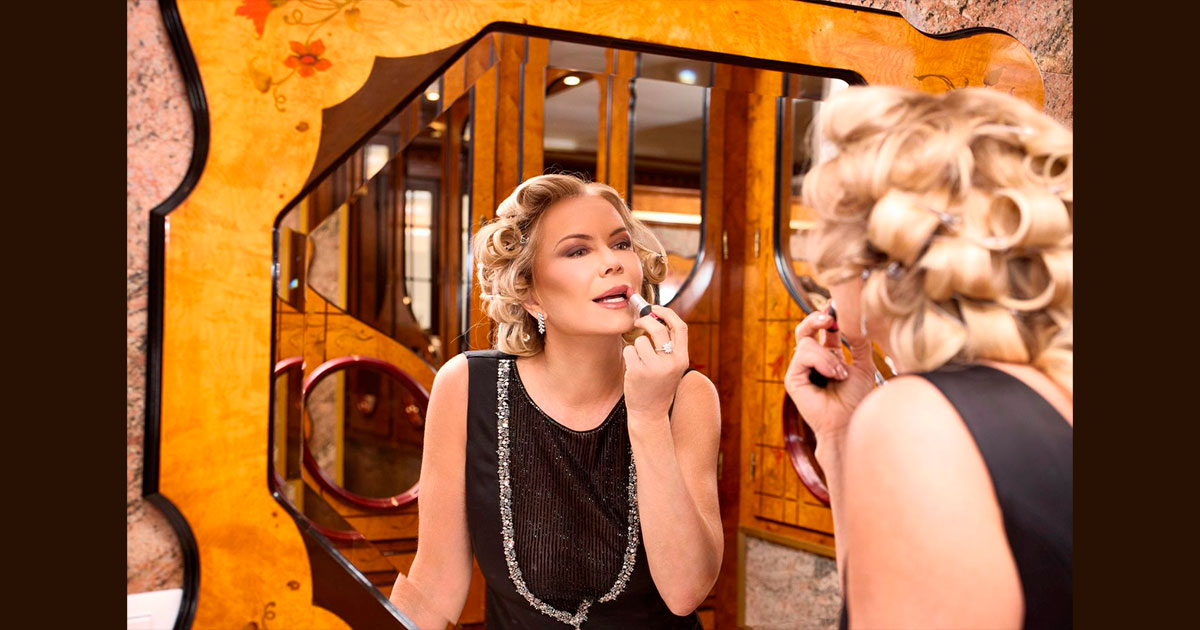
credit: Laura de Paoli
- English
- Italian
The artist opening Vasco Rossi’s concerts opens up about Bang Bang Bang, the freedom to love, the vulnerability behind the spotlight and the journey that turned Raffaella into Raffi.
We often go to concerts with one goal in mind: seeing the headliner.
We walk into the stadium, find our seats, check our phones, buy a beer or a tour T-shirt, and wait for the lights to go down. Meanwhile, someone steps onto the stage, someone whose name is still unfamiliar to many. The opening act. The artist the audience listens to while still settling in.
And yet, sometimes, it is worth stopping and paying attention.
Because behind those twenty or thirty minutes before the headliner appears, there are often years of sacrifice, countless miles traveled, songs written and artists fighting to earn their place.
Since 2022, Raffi has been opening Vasco Rossi’s concerts. Not just a one-off opportunity, but a path built in front of one of Italy’s most demanding audiences. The same audience that, as she told me during our interview, “knows immediately whether you’re being real.” If you are not genuine, if you do not truly believe in what you are singing, people notice immediately.
Listening to Bang Bang Bang, her latest single, it is easy to understand why that audience chose to listen.
The song tackles a timely and delicate issue, toxic relationships, through a rock-driven, provocative and at times theatrical lens. The metaphor of “shooting” runs throughout the lyrics, becoming a symbol of relationships that keep hitting, hurting and holding people back. Yet the heart of the song is not anger. It is freedom.
Not surprisingly, when I asked her which lyric felt closest to her, the answer came instantly:
“Let me scream, everyone should be free to love.”
It is a line that perfectly captures where Raffi is in her life today. After Per Nessuno, Vivo Senza Te, Fashion Rock and Hasta La Vista, Bang Bang Bang represents an important milestone in a journey that began alongside Roberto Casini, longtime collaborator of Vasco Rossi and a key figure in shaping her musical universe. Raffi herself describes the song as a “semicolon”, something that closes one chapter while opening another.
There is, however, a side of Raffi that the public rarely gets to see. Not the one that shines under the spotlight, but the one that emerges when the music stops and only Raffaella remains.
Raffaella is thoughtful, constantly questioning herself, openly admitting that she feels more vulnerable in everyday life than she does in front of thousands of people. Raffi, on the other hand, appears when the stage lights come on. That is when, as she describes it, something awakens. An instinctive energy that frees her from inhibition and allows her to express her truth.
And perhaps it all began long before the stadiums.
With a little girl who, during a school recital, raised her hand and volunteered to sing without telling her parents. They arrived at school with no idea their daughter was about to perform. It was a surprise for them. Perhaps for her as well.
Today, that same little girl opens Vasco Rossi’s concerts, brings rock music across Italy and continues to believe that the most important moment for an artist is still the one spent face to face with the audience.I met her to talk about Bang Bang Bang, the stage, the vulnerabilities that often become creativity, the direct connection she maintains with her fans and that inner voice which, according to her, we should all learn to listen to a little more often.
Let’s start with Bang Bang Bang. Throughout the song there is a constant contrast between desire, anger, dependency and freedom. How much of this song is personal to you?
— “Bang Bang Bang is part of a musical journey I have been pursuing since 2022 and, like all my songs, it is deeply connected to a specific phase of my life. Even with Per Nessuno, my first single, there was already the seed of rebellion, the first heartbreaks, the first youthful frustrations, all the emotions that come with an age when feelings begin to be experienced intensely.
Then came Vivo Senza Te, a song that gave us an important confirmation. In a very short time it reached 150,000 views on YouTube, a completely unexpected result that encouraged us to keep moving forward. When I say ‘us’, I am referring to Roberto Casini, with whom I started this musical adventure and who has written all my singles.
Then came Fashion Rock, which became almost our stylistic signature, a way of approaching music that I would describe as ‘elegant rock’, followed by Hasta La Vista. Finally we arrived at Bang Bang Bang, which is probably our hardest hitting song. Not only because of its more intense and edgy sound, but also because of the themes it explores.”
How did Bang Bang Bang come to life? At what point in your life did this song arrive?
— “Unfortunately, it was inspired by a very current issue. I say unfortunately because every day we hear about difficult, toxic situations that too often lead to very serious consequences.
Bang Bang Bang is a cry. A cry that claims the right to love and to do so in the way we believe is right, without conditioning and without fear. That is the most important message I wanted to convey.
The real heart of the song is contained in one specific line: ‘Let me scream, everyone should be free to love.’ If I had to summarize the song in just a few words, I would choose those. That is where the deepest meaning of the track lies, the freedom to be yourself and to live your feelings without the judgment of others.”
The entire song revolves around the metaphor of “shooting”, not used in a literal or violent sense, but as a symbol of toxic attraction, emotional dependency, desire, conflict and emotional freedom. The obsessive repetition of “Bang Bang Bang” becomes almost the sound of a relationship that keeps striking, a repeated emotional blow. The lyrics are very direct: “Shoot me, my love, shoot me and don’t miss”, “Bang bang bang, leave your message on my voicemail”, “Ask me out, but come armed”, “While you’re shooting at me, go to hell, please.” Then we arrive at what seems to be the key line of the song: “Let me scream… everyone should be free to love.” That idea of being free to love feels like the true heart of the track. It also comes across in the music video, where your presence is incredibly intense, sensual, theatrical and almost cinematic. When you filmed the video, was it the same energy you bring to the stage during your live performances?
— “Yes, especially with Bang Bang Bang. Like every rock song worthy of the name, it is a provocative track. Provocation is something that belongs to many of my works, it is almost an essential part of the way I express myself.
Thank you for what you said about my energy, but let me tell you something, there are actually two of us. There is Raffaella, the person speaking to you right now, and then there is Raffi, who emerges when I step onto the stage. They are two different dimensions of who I am. It’s not just my opinion, many people have pointed it out over the years.
When I go on stage, something instinctive happens, something almost ancestral. It is an intimate and direct feeling that frees me from every inhibition and pushes me to express my truth in the most authentic way possible. It is not something I plan or intentionally create. It simply happens.
The incredible thing is that the first time I had the opportunity to sing in a stadium was in 2022, opening for Vasco Rossi. Before that I had never performed on such an important stage and, paradoxically, I had never even been inside a stadium. I had never attended a football match or a live concert. We were all facing a huge question mark, myself included.
We were young and inexperienced, both me and the guys from XXEnergy. That experience became our first real test. I still belong to the school of thought that says the most honest judgment comes from a live audience. The public understands everything. If you are not genuine, if you are singing something you do not truly believe in, people notice immediately.
And Vasco’s audience is even more demanding because they are used to recognizing emotion, honesty and truth. Vasco is a person who is deeply honest with himself and that authenticity reaches people.
We stepped onto that stage carrying our truth and the audience felt it. We received an incredibly warm welcome, much more than we expected. Vasco supported us from the very beginning. In 2022 we were only supposed to open two dates, but after hearing us he strongly wanted us for a third. From there everything else followed and we continued opening his concerts.”
Since 2022 you have been opening Vasco Rossi’s concerts and, at some point, a phrase arrived that almost became your trademark: “RAFFI rocks.” What did you think the first time you heard Vasco say it?
— (Laughs) “I thought, ‘Damn!’
Honestly, that was the very first thing that came to mind.
Then I told myself that maybe, just maybe, we were doing something right. That was the feeling I had. Hearing it from someone like Vasco, who has seen generations of artists come and go and who doesn’t hand out compliments lightly, was a very important moment.
It gave me confirmation that the path we were building made sense and that it was reaching people in the right way.”
A little while ago you told me that Raffaella is sitting here talking with me, while Raffi emerges on stage. How important is it, in that transformation, to tell a song not only through words, but also through your body, visual imagery and stage presence?
— “I believe that a song should first and foremost be told through its lyrics. Everything that helps explain those words better and communicate them more effectively becomes important.
That is why the way I move on stage, the images I choose and the actions I take are all a natural consequence of what I am trying to tell. They are born from the desire to communicate the meaning of the song in the best possible way.
In the end, everything starts with the words. Everything else comes afterward and is simply my way of giving even more strength to what the song wants to express.”
Compared to your previous songs, Bang Bang Bang seems to portray a stronger and more self aware version of Raffi. Can we consider it the beginning of a new artistic chapter?
— “Absolutely. I think we all grow over time and I feel that I have grown both artistically and personally.
Bang Bang Bang represents an important point in my journey. Actually, more than a full stop, I would call it a semicolon, something that closes one phase while opening another.
For me, it marks the beginning of a more conscious, more mature path, one that is closer to the person and artist I am today.”
The song carries a very contemporary rock soul, but also something glam, elegant and rebellious. Which artists or musical worlds inspire you today?
— “I listen to an enormous amount of music. I genuinely love music itself, without barriers or prejudices about genres, so I always try to discover different sounds and influences.
One of the artists I admire most is certainly David Bowie, who remains an extraordinary source of inspiration for me. And of course it would be impossible to deny how important Vasco Rossi has been in my musical upbringing. I grew up listening to his songs and even now it feels surreal to find myself sharing a professional journey with him. First you listen to him as a fan, then suddenly you find yourself right there alongside him. It’s something that is difficult to put into words.
I also owe a lot to my father. Progressive rock was a huge part of my musical education. Bands such as Premiata Forneria Marconi, Jethro Tull and the great music of the 1970s and 1980s left a profound mark on my journey.
In general, rock in all its shades is what fascinates me the most. It is the musical language I feel closest to and the one I continue to listen to with the greatest passion.”
Was there a particular emotion you wanted to leave with those listening to Bang Bang Bang?
— (Laughs) “Honestly? When I sing this song, I feel incredibly powerful.
It gives me an amazing sense of strength. Of course, I believe in it deeply and I love it, but beyond that, it is a feeling I experience every single time I perform it. It makes me feel strong, confident and free.
If even one person, listening to it or watching me on stage, can feel that same strength and that same energy, then for me it is already a victory. If someone can recognize themselves in this song and, even for a few minutes, feel stronger and more like themselves, then I know I have done my job well.
At the end of the day, that is what I am looking for through music, to convey something real that can truly reach people.”
Is there one line from Bang Bang Bang that feels more personal to you than any other?
— “Without a doubt, ‘Let me scream, everyone should be free to love.’ It is the heart of the song, its central message. It is the line I feel closest to and the one that best represents what I wanted to communicate.
If I had to choose another one, I would say: ‘Shoot me and put a stop to your deviations, your madness, your excuses.’
I like it because it describes that moment when you stop accepting certain dynamics and ask the other person to stop, to truly look at themselves. It is a powerful line, but also a very honest one, and it represents an important part of the song’s meaning.”
When you’re on stage, do you feel more free or more vulnerable?
— “More free, without any doubt.”
If you had to describe today’s RAFFI in three words, what would they be?
— “Are we talking about Raffi the singer? Then I would describe her as energetic, sometimes sensual, but above all, rock. Definitely rock.”
So far we’ve talked about Raffi. If we shift our focus to Raffaella, what quality do you value most in yourself and what flaw are you still trying to improve?
— “As a strength, I hope I can say good manners. I think it is an important quality and something I care about deeply.
As for flaws, I have plenty. But if I have to choose one, I would say that I’m sensitive and easily offended. I’m working on it, but yes, definitely that.” (laughs)
You have a very loyal and active fanbase. What kind of relationship do you have with your fans and how important is it for you to maintain direct contact through social media?
— “I have a love hate relationship with social media. I like the original idea behind it, creating connections, bringing people together and encouraging communication. Today, however, I think it is often used in the wrong way and that too much attention is given to arguments and controversies that probably do not deserve it.
Personally, I see social media mainly as a meeting point before the live show. The concert is the final moment, the moment when people truly come together, sing, dance, share an experience and celebrate. Social media is part of the journey that leads to that moment.
I am lucky to have people who support me with great affection. My fan club was created in 2022 by Samuele, a Vasco Rossi fan who decided to build this community around me, and it has grown tremendously ever since.
I try to maintain a direct and sincere relationship with the people who follow me. Whenever I can, I reply to messages because I genuinely enjoy communicating with people and creating a real dialogue. That is something that means a lot to me.”
For our international readers who may be discovering you for the first time, how would you describe who Raffi is and why they should listen to your music?
— “Raffi is a singer who is trying to bring a little more rock into the world and share that energy through music.
I would love for people listening to my songs to find something of themselves in them, an emotion, a thought or simply a feeling they can relate to. Maybe someone will enjoy them, maybe someone will see themselves in the stories I tell.
At the end of the day, my goal is very simple: to bring my songs to as many people as possible and share what I have to say through music.”
Is there a memory of little Raffaella that you still carry with you today, even when you step onto the stage?
— “Absolutely. I remember when I was very young and sang for the first time during a primary school recital. The funny thing is that I hadn’t told anyone.
My parents arrived at the event without knowing that I had volunteered to sing. The teacher had asked if anyone wanted to perform and I simply raised my hand and said, ‘I do.’
That is how it all began, in the most spontaneous way.
It was the first time I put myself out there in front of other people. Nobody expected it, maybe not even me. I still remember the surprise on my parents’ faces when they heard me sing. I think that was the moment they realized it might be worth supporting me on this journey, that maybe there was something special there worth nurturing.
When I look back now, I think everything started right there, with that little girl who raised her hand without overthinking it and decided to sing.”
So even as a child, did you already imagine a future in music?
— “Music has always been part of my life. I owe a lot to my father because he was the one who made me fall in love with it from a very young age.
Even though my parents have different careers, music has always been in their hearts. They are both labor consultants, just like me, but they also sing as a passion and have always nurtured their artistic side. Because of that, music was always present in our family and, in a way, it was always present within me too.
I have always loved dancing as well, and it remains one of my greatest passions today. But there is something that might surprise people who see me on stage, as a child I was very shy.
That is why, when I look back, I almost smile at the journey I have taken. Music was always there beside me, even when I had no idea where it would eventually lead me.”
If you could meet little Raffaella today, the girl who raised her hand in school and sang in front of everyone for the first time, what would you say to her?
— “I would tell her: believe in yourself, keep going and always trust what you feel.”
Talking with you today, behind the strong, energetic and rock image you project, is there a fragile side of yourself that you protect?
(Laughs) “That’s a difficult question, because I think we all have our vulnerabilities.”
And where do you feel most vulnerable?
— “I feel more uncomfortable, if we can consider that a form of vulnerability, in everyday situations than I do on stage.
Like everyone else, I have my insecurities. I often ask myself whether I’m doing the right thing, whether I’m moving in the right direction. I’m a very reflective person and I’m constantly trying to improve myself.
On one hand, that’s a strength. On the other, it can become a vulnerability because it leads you to constantly question yourself. I often find myself asking, ‘Am I growing in the right way? Am I doing things right?’ Sometimes I even end up thinking, ‘Maybe I’m getting everything wrong.’
It can be counterproductive because you risk bringing yourself down. But I think that’s part of my character and, ultimately, part of the way I am as an artist.”
Yet creativity often comes from those very vulnerabilities.
— “Exactly. Very often it is in those moments when I question myself that something new is born. Out of that vulnerability, out of those doubts, creation emerges.”
If you could leave a message for a young woman who feels trapped in a toxic relationship or crushed by the judgment of others, what would you tell her?
— “I would tell her to always listen to that feeling she carries inside herself. The one you feel in your gut, deep in your stomach. That little voice that is always there, speaking to you even when you try to ignore it.
Because the truth is that you know. You feel immediately whether something is right for you or not. There’s no point fooling ourselves, our instincts often know before our minds do.
You have to learn to listen to yourself and trust what you feel. Always.
Because nobody can truly know what is right for you. Not your parents, not your boyfriend, not your friends, not the people around you. Only you know what makes you feel good and what doesn’t.
That’s why I would tell her to always listen to that inner voice and have the courage to follow what she truly feels.”
Before we say goodbye, is there anything you would like to say to the readers of Global Event Magazine and to those discovering you today through this interview?
— “I truly hope that Bang Bang Bang will resonate with people and reach as many listeners as possible. I hope this song gets heard and succeeds in conveying all the energy we poured into this project.
Right now we are very focused on the tour. We have some intense and exciting months ahead filled with music. After the upcoming live dates, we will once again join Vasco Rossi on tour and then continue our own live journey.
I invite everyone to follow me on my social media channels, where I share updates, tour dates and everything related to my musical world. I look forward to seeing you there and hopefully meeting you under a stage very soon.”
When an interview comes to an end, you’re always looking for one sentence that captures everything. In this case, however, I think Raffi had already given it to me during our conversation:
“Always trust what you feel.”
Perhaps that is the thread connecting the little girl who volunteered to sing without telling her parents, the young woman who still questions herself today, and the artist who stands in front of thousands of people feeling, paradoxically, more free than vulnerable.
Between expectations, judgment and self doubt, Raffi always comes back to the same place: listening to that inner voice which, as she told me, often knows what is right for us long before our minds do.
It is the message that runs through Bang Bang Bang, the reason why the line “Let me scream, everyone should be free to love” became the heart of the song and, perhaps, one of the reasons why audiences continue to connect with her.
Because behind the rock attitude, the energy, the provocation and the spotlight, there is something that cannot be manufactured: the feeling of standing in front of someone who truly believes in what they sing.
And perhaps that is where every meaningful musical journey begins.
If you would like to learn more about Raffi, follow her artistic journey and stay updated on upcoming tour dates, you can find her on her official channels:
Instagram: https://www.instagram.com/raffiofficialraffi/
Official Fan Club: https://www.facebook.com/groups/755247335719167
YouTube – Watch and listen to Bang Bang Bang: https://www.youtube.com/watch?v=XC0v5ea3w94
Spotify: Spotify
Because, as this conversation revealed, behind Raffi’s energy there is a story worth listening to.
L’artista che apre i concerti di Vasco Rossi. Bang Bang Bang è il nuovo capitolo di Raffi: un viaggio tra musica, palco, fragilità e libertà raccontato in un’intervista senza filtri.
Spesso arriviamo ai concerti con un solo obiettivo: vedere il protagonista della serata.
Entriamo nello stadio, cerchiamo il nostro posto, controlliamo il telefono, compriamo una birra o una maglietta del tour e aspettiamo che si spengano le luci. Nel frattempo, sul palco sale qualcuno che per molti è ancora un nome sconosciuto. L’artista che apre il concerto. Quello che il pubblico ascolta distrattamente mentre continua a prendere posto.
Eppure, qualche volta, vale la pena fermarsi ad ascoltare.
Perché dietro quei venti o trenta minuti che precedono l’arrivo della star ci sono spesso anni di sacrifici, chilometri macinati, canzoni scritte e artisti che stanno cercando di conquistarsi il proprio spazio.
Dal 2022 Raffi è l’artista che apre i concerti di Vasco Rossi. Non una data occasionale, ma un percorso costruito davanti a uno dei pubblici più esigenti d’Italia. Quello stesso pubblico che, come mi ha raccontato durante l’intervista, “ti sgama tutto”. Se non sei vero, se non credi davvero in quello che stai cantando, se ne accorge immediatamente.
Ascoltando Bang Bang Bang, il suo nuovo singolo, si capisce perché quel pubblico abbia deciso di seguirla.
Il brano affronta un tema attuale e delicato come quello delle relazioni tossiche, ma lo fa attraverso una chiave rock, provocatoria e a tratti teatrale. La metafora dello “sparare” attraversa tutto il testo e diventa il simbolo di quei rapporti che continuano a colpire, ferire e trattenere. Eppure il cuore della canzone non è la rabbia. È la libertà.
Non a caso, quando le chiedo quale sia la frase che sente più sua, la risposta arriva immediata: “Lasciami gridare, tutti liberi di amare.”
È una frase che racconta bene anche il momento che Raffi sta vivendo oggi. Dopo Per Nessuno, Vivo Senza Te, Fashion Rock e Hasta La Vista, Bang Bang Bang rappresenta una tappa importante di un percorso nato insieme a Roberto Casini, storico collaboratore di Vasco Rossi, figura centrale nella costruzione del suo universo musicale. Lei stessa definisce questo brano un “punto e virgola”: qualcosa che chiude una fase e, allo stesso tempo, ne apre un’altra.
C’è però un aspetto di Raffi che il pubblico vede meno spesso. Non quello che emerge sotto i riflettori, ma quello che prende forma quando la musica si ferma e resta semplicemente Raffaella.
Raffaella è riflessiva, si mette continuamente in discussione, ammette di sentirsi più fragile nella vita quotidiana che davanti a migliaia di persone. Raffi, invece, emerge quando si accendono le luci del palco. È lì che, come racconta lei stessa, qualcosa si risveglia. Un’energia istintiva che la libera dalle inibizioni e le permette di esprimere la propria verità.
E forse tutto è iniziato molto prima degli stadi. Da una bambina che, durante un saggio della scuola primaria, alzò la mano per cantare senza dire nulla ai genitori. Arrivarono a scuola senza sapere che la figlia si sarebbe esibita. Fu una sorpresa per loro. Forse anche per lei. Oggi quella bambina apre i concerti di Vasco Rossi, porta il rock in giro per l’Italia e continua a credere che il momento più importante per un artista sia ancora quello davanti al pubblico.
L’ho incontrata per parlare di Bang Bang Bang, del palco, delle fragilità che spesso diventano creatività, del rapporto diretto che mantiene con il suo pubblico e di quella voce interiore che, secondo lei, dovremmo imparare ad ascoltare più spesso
Partiamo proprio da Bang Bang Bang. Nel brano c’è un continuo contrasto tra desiderio, rabbia, dipendenza e libertà. Quanto c’è di personale dentro questa canzone?
— «Bang Bang Bang fa parte di un percorso musicale che porto avanti dal 2022 e, come tutti i miei brani, è profondamente legato a una fase della mia vita. Già con Per Nessuno, il mio primo singolo, c’era il germe della ribellione: le prime delusioni sentimentali, le prime arrabbiature giovanili, tutto quello che caratterizza un’età in cui si iniziano a vivere le emozioni in modo intenso.
Successivamente è arrivata Vivo Senza Te, un brano che ci ha dato una conferma importante. In pochissimo tempo ha raggiunto 150 mila visualizzazioni su YouTube, un risultato totalmente inaspettato che ci ha dato la spinta per continuare questo percorso. Quando dico “ci”, mi riferisco a Roberto Casini, con cui ho iniziato questa avventura musicale e che ha firmato tutti i miei singoli.
Poi sono arrivati Fashion Rock, che è diventata quasi la nostra bandiera stilistica, un modo di intendere la musica che definirei “elegant rock”, e Hasta La Vista. Fino ad arrivare a Bang Bang Bang, che rappresenta probabilmente il nostro brano più duro. Non soltanto per le sonorità, più intense e graffianti, ma anche per le tematiche che affronta.»
Come nasce Bang Bang Bang? In quale momento della tua vita è arrivata questa canzone?
— «Purtroppo nasce da una tematica molto attuale. Dico “purtroppo” perché ogni giorno sentiamo parlare di situazioni difficili, tossiche, che troppo spesso sfociano in conseguenze molto gravi.
Bang Bang Bang è un grido. Un grido che rivendica il diritto di amare e di farlo nel modo che riteniamo giusto, senza condizionamenti e senza paure. È questo il messaggio più importante che volevo trasmettere.
In realtà il vero cuore del brano è racchiuso in una frase precisa: “Lasciami gridare, tutti liberi di amare”. Se dovessi riassumere la canzone in poche parole, sceglierei proprio quelle. È lì che si trova il significato più profondo del pezzo: la libertà di essere sé stessi e di vivere i propri sentimenti senza il giudizio degli altri.»
Il testo ruota completamente attorno alla metafora dello “sparare”, che non viene usata in senso realistico o violento, ma come simbolo di attrazione tossica, dipendenza emotiva, desiderio, conflitto e libertà sentimentale. Il ripetersi ossessivo di “Bang Bang Bang” diventa quasi il rumore di una relazione che colpisce continuamente, un colpo emotivo reiterato. Le frasi che emergono sono molto dirette: “Sparami un colpo amore, sparami e non sbagliare”, “Bang bang bang, lasciami il tuo messaggio nella segreteria”, “Dammi un appuntamento ma vieni armato”, “Mentre mi stai sparando vai all’inferno per favore”. Fino ad arrivare a quella che sembra essere la frase chiave del brano: “Lasciami gridare… tutti liberi di amare”. “Tutti liberi di amare” sembra essere il vero cuore del pezzo. Tutto questo emerge anche nel videoclip, dove hai una presenza molto intensa: sensuale, teatrale, quasi cinematografica. Quando hai girato il video, era la stessa energia che porti sul palco durante i tuoi live?
— «Sì, soprattutto in Bang Bang Bang. Come ogni canzone rock che si rispetti, è un brano provocatorio. La provocazione è una cifra che appartiene a molti dei miei lavori, è quasi un elemento imprescindibile del mio modo di esprimermi.
Ti ringrazio per quello che hai detto sull’energia, ma ti confesso una cosa: in realtà siamo in due. C’è Raffaella, la persona che sta parlando con te adesso, e poi c’è Raffi, che emerge quando salgo sul palco. Sono due dimensioni diverse di me. Non lo dico soltanto io: me lo hanno fatto notare in molti nel corso degli anni.
Quando entro in scena succede qualcosa di molto istintivo, quasi ancestrale. È una sensazione intima e diretta che mi libera da ogni inibizione e mi spinge a esprimere la mia verità nel modo più autentico possibile. Non è qualcosa che costruisco a tavolino o che faccio volontariamente. Accade e basta.
La cosa incredibile è che la prima volta che ho avuto l’opportunità di cantare in uno stadio è stato nel 2022, aprendo un concerto di Vasco Rossi. Prima di allora non ero mai salita su un palco così importante e, paradossalmente, non ero mai stata nemmeno in uno stadio: non avevo mai visto una partita, né un concerto dal vivo. Ci trovammo tutti davanti a un enorme punto interrogativo, me compresa.
Eravamo giovani, inesperti, io e i ragazzi degli XXEnergy. Quella esperienza è stata il nostro primo vero banco di prova. Io appartengo ancora a quella scuola di pensiero secondo cui il giudizio più sincero arriva dal live. Il pubblico capisce tutto. Se non sei vera, se stai raccontando qualcosa in cui non credi davvero, se ne accorge immediatamente.
E il pubblico di Vasco è ancora più esigente, perché è abituato a riconoscere l’emotività, l’onestà e la verità. Vasco è una persona profondamente onesta con sé stesso e questa autenticità arriva alla gente.
Noi siamo saliti su quel palco portando la nostra verità e il pubblico l’ha percepita. Abbiamo ricevuto un’accoglienza calorosissima, molto più di quanto ci aspettassimo. E anche Vasco ci ha sostenuti fin dall’inizio. Nel 2022 avremmo dovuto aprire soltanto due date, ma dopo averci ascoltati ci volle fortemente anche per una terza. Da lì è iniziato tutto il resto e abbiamo continuato ad aprire i suoi concerti.»
Dal 2022 apri i concerti di Vasco Rossi e, a un certo punto, è arrivata anche una frase che è diventata quasi un marchio di fabbrica: “RAFFI spacca”. Quando hai sentito Vasco dirlo per la prima volta, cosa hai pensato?
— (Ride) «Ho pensato: “Minchia!”. Davvero, è stata la prima cosa che mi è venuta in mente.
Poi mi sono detta che forse, forse, qualcosa di buono lo stiamo facendo. Ho avuto proprio questa sensazione. Sentirselo dire da una persona come Vasco, che ha visto passare generazioni di artisti e che non regala complimenti tanto per farli, è stato un momento importante.
Mi ha dato la conferma che il percorso che stavamo costruendo aveva un senso e che stava arrivando alle persone nel modo giusto.»
Poco fa mi hai detto che qui con me c’è Raffaella, mentre sul palco emerge Raffi. Quanto conta, in questa trasformazione, raccontare una canzone non solo attraverso le parole, ma anche attraverso il corpo, le immagini e la presenza scenica?
— «Credo che una canzone debba essere raccontata prima di tutto attraverso il testo. Tutto ciò che può aiutare a spiegare meglio le parole e a trasmetterle nel modo più efficace possibile diventa importante.
Per questo motivo, il modo in cui mi muovo sul palco, le immagini che scelgo e le azioni che compio sono una conseguenza naturale di ciò che sto raccontando. Nascono dalla volontà di comunicare il significato del brano nel miglior modo possibile.
In fondo, tutto parte sempre dalle parole. Il resto arriva dopo ed è semplicemente il modo che trovo per dare ancora più forza a quello che la canzone vuole esprimere.»
Rispetto ai tuoi brani precedenti, Bang Bang Bang sembra raccontare una versione più forte e consapevole di Raffi. Possiamo considerarlo l’inizio di un nuovo capitolo artistico?
— «Assolutamente sì. Credo che tutti noi cresciamo nel tempo e io sento di essere cresciuta sia artisticamente sia personalmente.
Bang Bang Bang rappresenta un punto importante del mio percorso. Anzi, più che un punto, lo definirei un punto e virgola: qualcosa che chiude una fase, ma che allo stesso tempo ne apre un’altra.
Per me è l’inizio di un cammino più consapevole, più maturo e più vicino alla persona e all’artista che sono oggi.»
Nel brano si percepisce un’anima rock molto contemporanea, ma anche qualcosa di glam, elegante e ribelle. Quali artisti o mondi musicali ti ispirano oggi?
— «In realtà ascolto davvero tantissima musica. Mi piace la musica in sé, senza particolari barriere o pregiudizi di genere, quindi cerco sempre di ascoltare cose diverse.
Tra gli artisti che amo di più c’è sicuramente David Bowie, che per me rimane una fonte d’ispirazione straordinaria. E poi sarebbe inutile negare quanto abbia contato Vasco Rossi nella mia formazione. Sono cresciuta ascoltando le sue canzoni e ancora oggi mi sembra assurdo ritrovarmi a condividere con lui un percorso professionale. Prima lo ascolti da fan, poi ti ritrovi lì accanto a lui: è qualcosa di difficile da spiegare a parole.
Ho sempre ascoltato molto anche grazie a mio padre. Il rock progressivo ha fatto parte della mia educazione musicale: gruppi come Premiata Forneria Marconi, Jethro Tull e tutta la grande musica degli anni Settanta e Ottanta hanno lasciato un segno importante nel mio percorso.
In generale, è il rock in tutte le sue sfumature ad affascinarmi di più. È il linguaggio musicale che sento più vicino e che continuo ad ascoltare con maggiore passione.»
C’è un’emozione particolare che volevi lasciare a chi ascolta Bang Bang Bang?
— (Ride) «Guarda, ti dico la verità: quando canto questa canzone mi sento una gran figa.
Mi dà una forza incredibile. Certo, ci credo molto e mi piace tantissimo, ma al di là di questo è proprio una sensazione che provo ogni volta che la canto. Mi fa sentire forte, sicura di me stessa, libera.
Ecco, se anche solo una persona, ascoltandola o vedendomi sul palco, riuscisse a provare quella stessa forza, quella stessa energia, allora per me sarebbe già una vittoria. Se qualcuno riesce a riconoscersi in questa canzone e, anche solo per pochi minuti, a sentirsi più forte e più sé stesso, significa che ho fatto bene il mio lavoro.
Alla fine è questo che cerco attraverso la musica: trasmettere qualcosa di vero che possa arrivare agli altri.»
C’è una frase di Bang Bang Bang che senti più tua di tutte?
— «Sicuramente “Lasciami gridare, tutti liberi di amare”. È il cuore del brano, il suo punto focale. È la frase che sento più vicina a me e che racchiude il messaggio che volevo trasmettere.
Se però devo sceglierne un’altra, direi: “Sparami e metti un freno alle tue deviazioni, alle tue follie, alle tue giustificazioni”.
Mi piace perché racconta quel momento in cui smetti di accettare certe dinamiche e chiedi all’altra persona di fermarsi, di guardarsi davvero. È una frase forte, ma anche molto sincera, e rappresenta bene una parte importante del significato della canzone.»
Quando sei sul palco ti senti più libera o più vulnerabile?
— «Più libera, senza alcun dubbio.»
Se dovessi descrivere la RAFFI di oggi con tre parole, quali useresti?
— «Parliamo di Raffi la cantante? Allora la definirei energica, sensuale a tratti, ma soprattutto rock. Decisamente rock.»
Finora abbiamo parlato di Raffi. Se invece ci spostiamo su Raffaella, qual è la qualità che ti riconosci di più e quale difetto stai ancora cercando di correggere?
— «Come pregio, spero di poter dire l’educazione. Credo sia una qualità importante e alla quale tengo molto.Come difetto, invece, ne avrei parecchi. Però se devo sceglierne uno direi che sono permalosa. Ci sto lavorando, ma sì, decisamente permalosa.» (ride)
Hai una fanbase molto affezionata e attiva. Che rapporto hai con i tuoi fan e quanto è importante per te mantenere un contatto diretto attraverso i social?
— «Con i social ho un rapporto di amore e odio. Mi piace l’idea con cui sono nati, cioè quella di creare connessioni, favorire gli incontri e la comunicazione tra le persone. Oggi, però, credo che vengano utilizzati anche in modi sbagliati e che troppo spesso si dia spazio a polemiche o discussioni che forse non meriterebbero tutta questa attenzione.
Per quanto mi riguarda, li considero soprattutto un punto di ritrovo prima del live. Il concerto è il momento finale, quello in cui ci si incontra davvero, si canta, si balla, si condivide un’esperienza e si fa festa insieme. I social rappresentano un po’ il percorso che porta a quel momento.
Ho la fortuna di avere persone che mi seguono con grande affetto. Il fan club è nato nel 2022 grazie a Samuele, un fan di Vasco Rossi che ha deciso di creare questa realtà dedicata a me, e da allora è cresciuto moltissimo.
Con chi mi segue cerco di mantenere un rapporto diretto e sincero. Rispondo sempre ai messaggi quando posso, perché mi piace comunicare con le persone e creare un dialogo vero. È una cosa a cui tengo molto.»
Per i nostri lettori internazionali che magari ti stanno scoprendo per la prima volta: come descriveresti in poche parole chi è Raffi e perché dovrebbero ascoltare la tua musica?
— «Raffi è una cantante che sta cercando di portare un po’ di rock in giro, di far vivere questa energia attraverso la propria musica.
Mi piacerebbe che chi ascolta le mie canzoni riuscisse a ritrovarci qualcosa di sé, un’emozione, un pensiero o semplicemente una sensazione in cui riconoscersi. Magari a qualcuno potranno piacere, magari qualcuno si rivedrà nelle storie che racconto.
In fondo il mio obiettivo è molto semplice: far arrivare le mie canzoni a più persone possibile e condividere con loro quello che ho da dire attraverso la musica.»
Esiste un ricordo della Raffaella bambina che senti ancora dentro di te e che porti con te anche oggi, quando sali sul palco?
— «Sicuramente sì. Ricordo quando ero piccolissima e cantai per la prima volta durante un saggio della scuola primaria. La cosa divertente è che non lo avevo detto a nessuno.
I miei genitori arrivarono al saggio senza sapere che mi ero proposta per cantare. La maestra aveva chiesto se qualcuno volesse esibirsi e io, semplicemente, alzai la mano e dissi: “Io”.
È nato tutto così, in modo molto spontaneo.
Quella è stata la prima volta in cui mi sono esposta davanti agli altri. Nessuno se lo aspettava, forse nemmeno io. Ricordo ancora la sorpresa dei miei genitori quando mi sentirono cantare. Credo che proprio in quel momento abbiano pensato che forse valeva la pena sostenermi in questo percorso, che forse c’era qualcosa di buono da coltivare.
Se oggi guardo indietro, penso che tutto sia iniziato lì, da quella bambina che senza pensarci troppo ha alzato la mano e ha deciso di cantare.»
Quindi già da bambina immaginavi un futuro nella musica?
— «La musica è sempre stata parte della mia vita. Devo molto a mio padre, perché è stato lui a farmela amare fin da quando ero piccola.
Anche i miei genitori, pur svolgendo un altro lavoro, hanno sempre avuto la musica nel cuore. Sono entrambi consulenti del lavoro, come me, ma per passione cantano e hanno sempre coltivato questo lato artistico. Per questo la musica è sempre stata presente nella nostra famiglia e, in un certo senso, è sempre stata presente anche dentro di me.
Ho sempre amato anche la danza, che ancora oggi rimane una delle mie grandi passioni. Però c’è una cosa che forse sorprende chi mi vede sul palco: da bambina ero molto timida.
Per questo, guardando indietro, mi fa quasi sorridere pensare al percorso che ho fatto. La musica è sempre stata lì, accanto a me, anche quando ancora non immaginavo dove mi avrebbe portata.»
Se potessi incontrare oggi la Raffaella bambina, quella che per la prima volta alzò la mano a scuola per cantare davanti a tutti, cosa le diresti?
— «Le direi: credi in te stessa, vai avanti tranquilla e credi sempre in quello che senti.»
Parlando con te in questo nostro incontro, dietro l’immagine forte, energica e rock che trasmetti, c’è una parte fragile che proteggi?
— (Ride) «È una domanda difficile, perché credo che tutti abbiamo delle fragilità.»
E in cosa ti senti più fragile?
— «Mi sento più a disagio, se possiamo considerarlo una forma di fragilità, nelle situazioni quotidiane piuttosto che sul palco.
Nella vita di tutti i giorni ho le mie insicurezze, come chiunque. Mi chiedo spesso se sto facendo la cosa giusta, se sto andando nella direzione corretta. Sono una persona molto riflessiva e cerco continuamente di migliorarmi.
Da un lato è una qualità, dall’altro può diventare una fragilità, perché ti porta a metterti sempre in discussione. Mi ritrovo spesso a chiedermi: “Sto crescendo nel modo giusto? Sto facendo bene?”. A volte arrivo persino a pensare: “Forse sto sbagliando tutto”.
Può essere controproducente in certe situazioni, perché rischi di buttarti giù da sola. Però credo che questo faccia parte del mio carattere e, in fondo, anche del mio modo di essere artista.»
Però spesso è proprio da quelle fragilità che nasce la creatività.
— «Esatto. Molte volte è proprio nei momenti in cui mi metto in discussione che nasce qualcosa di nuovo. Da quella fragilità, da quei dubbi, arriva poi la creazione.»
Se dovessi lasciare un messaggio a una ragazza giovane che oggi si sente intrappolata in una relazione tossica o schiacciata dal giudizio degli altri, cosa le diresti?
— «Le direi di ascoltare sempre quella sensazione che sente dentro di sé. Quella che senti nella pancia, nello stomaco. Quella vocina che c’è e che parla, anche quando cerchiamo di ignorarla.
Perché la verità è che tu lo sai. Lo senti subito se una cosa è giusta oppure no. È inutile prenderci in giro: il nostro istinto spesso lo sa prima ancora della nostra testa.
Bisogna imparare ad ascoltarsi e ad avere fiducia in quello che si sente. Sempre.
Perché nessuno può sapere davvero cosa è giusto per te. Non i tuoi genitori, non il tuo fidanzato, non gli amici, non chi ti sta accanto. Solo tu puoi sapere cosa ti fa stare bene e cosa no.
Per questo direi di ascoltare sempre quella voce interiore e di avere il coraggio di seguire ciò che sente davvero.»
Prima di salutarci, c’è qualcosa che vorresti dire ai lettori di Global Event Magazine e a chi ti sta scoprendo oggi attraverso questa intervista?
— «Spero davvero che Bang Bang Bang possa piacere e arrivare a tante persone. Mi auguro che questa canzone si faccia ascoltare e che riesca a trasmettere tutta l’energia che abbiamo messo dentro questo progetto.
In questo momento siamo molto concentrati sul tour. Ci aspettano mesi intensi e pieni di musica. Dopo i prossimi appuntamenti live partiremo nuovamente con il tour insieme a Vasco Rossi e successivamente continueremo con il nostro percorso dal vivo.
Invito tutti a seguirmi sui miei canali social, dove condivido aggiornamenti, date e tutto quello che riguarda il mio mondo musicale. Vi aspetto e spero di incontrarvi presto sotto un palco.»
Quando si conclude un’intervista si cerca sempre una frase che riassuma tutto. In questo caso, però, credo che quella frase Raffi l’abbia già pronunciata durante la nostra conversazione. “Credi sempre in quello che senti.”
Forse è questo il filo che unisce la bambina che si propose di cantare senza avvisare i genitori, la ragazza che oggi continua a mettersi in discussione e l’artista che sale sul palco davanti a migliaia di persone sentendosi, paradossalmente, più libera che vulnerabile.
Tra aspettative, giudizi e insicurezze, Raffi continua a tornare sempre allo stesso punto: ascoltare quella voce interiore che, come ci ha raccontato, spesso sa già cosa è giusto per noi molto prima della nostra testa.
È il messaggio che attraversa Bang Bang Bang, il motivo per cui il verso “Lasciami gridare, tutti liberi di amare” è diventato il cuore del brano e, forse, anche il motivo per cui il pubblico che la incontra dal vivo continua a seguirla.
Perché dietro il rock, l’energia, la provocazione e i riflettori, resta qualcosa che non può essere costruito a tavolino: la sensazione di trovarsi davanti a qualcuno che crede davvero in ciò che canta.
E forse è proprio da lì che comincia ogni viaggio musicale destinato a lasciare il segno.
Se volete conoscere meglio Raffi, seguire il suo percorso artistico e restare aggiornati sulle prossime date del tour, potete seguirla sui suoi canali ufficiali.
Instagram: https://www.instagram.com/raffiofficialraffi/
Fan Club Ufficiale: https://www.facebook.com/groups/755247335719167
YouTube – Guarda e ascolta Bang Bang Bang: BANG BANG BANG – RAFFI
Spotify: Spotify
Perché, come abbiamo scoperto in questa intervista, dietro l’energia di Raffi c’è una storia che merita di essere ascoltata.