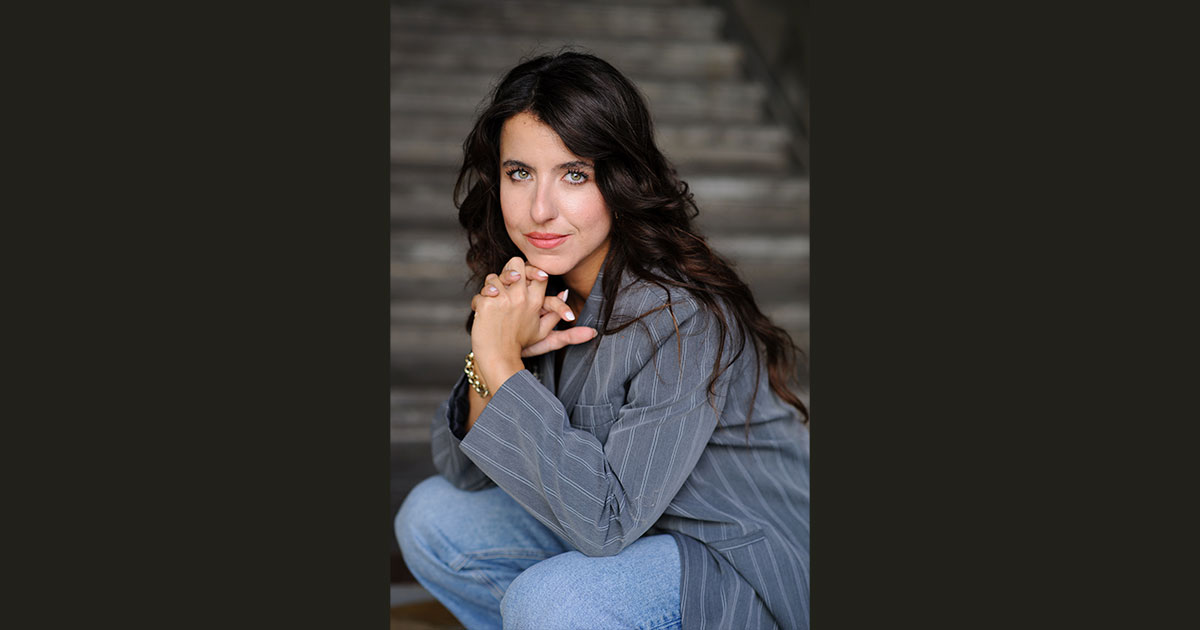
Nessy Guerra and her daughter Aisha, published with permission of Nessy Guerra.| Nessy Guerra e sua figlia Aisha, foto pubblicate con il permesso di Nessy Guerra.
- English
- Italian
The young Italian woman stranded in Egypt speaks exclusively about her legal battle, her fear, the role of diplomacy, and her desire to return to Italy with little Aisha.
There are stories that cannot be read merely as news events, because within them lies the weight of fear, motherhood, justice, diplomacy, and that universal question that concerns every civilized country: how much is a mother’s freedom worth when the future of a child is also at stake?
This is a story that cannot remain confined within the borders of two countries.
The story of Nessy Guerra does not concern only Italy and Egypt. It speaks to many other women around the world: women who have tried to leave relationships marked by control, fear, or violence; mothers involved in international custody disputes over their children; citizens who, far from their own country, have found themselves vulnerable before different legal systems, cultural barriers, and extremely long diplomatic timelines.
At the heart of this story are questions that speak to everyone: how can a mother be protected when she is far from her own country? How vulnerable can a woman become before a legal system she does not fully understand? And what happens to a child when the lives of adults become trapped inside an international legal conflict?
Nessy’s case touches on universal issues: women’s rights, the protection of minors, domestic violence, international child abduction, the role of embassies, the limits of consular assistance, diplomatic responsibility, and the need to look beyond prejudice. Because when justice meets different cultures, laws, and systems, it can turn into a maze. And inside that maze, too often, remain trapped the lives of those who are asking only for protection, to be heard, and for freedom.
The story of Nessy Guerra, a young Italian woman originally from Sanremo, now stranded in Egypt with her daughter Aisha, is one of those stories.
A story that began with a marriage, with a life built far from Italy, and then gradually turned into a complex legal and diplomatic battle.
According to Nessy’s account and that of her defense team, the relationship with her ex husband, the Italian Egyptian citizen Tamer Hamouda, allegedly deteriorated into a situation marked by violence, threats, and psychological control. From there came the decision to separate and the desire to return to Italy with her daughter. But that return, for her, became the beginning of a long legal maze between two countries, two legal systems, and a little girl at the center of it all.
The most painful issue remains Aisha. A travel ban has been placed on the child’s passport, preventing her from leaving Egypt. A custody dispute has unfolded around her, intertwined with the adultery complaint filed against Nessy by her ex-husband, an offense that in Egypt can carry criminal consequences, including imprisonment.
On February 19, 2026, an Egyptian court sentenced Nessy Guerra to six months in prison and forced labor. On April 28, 2026, the sentence was upheld on appeal, making the risk of arrest concrete. Today, Nessy is still in Egypt: an appeal before the Court of Cassation has been filed, little Aisha remains subject to restrictions preventing her from leaving the country, and, on the diplomatic front, Italy has submitted a request for a presidential pardon to the Egyptian authorities.
Mother and daughter remain suspended between justice, diplomacy, and waiting, while Italian authorities continue to seek a solution that could allow them to return safely.
But beyond the legal proceedings, one simple question remains: how long can a mother’s life be left suspended?
This interview was born from the desire to give Nessy Guerra a voice, not only as the protagonist of a legal case, but as a woman, a mother, an Italian citizen abroad, and a person asking for a real chance at a future.
This is not only the story of a conviction, an appeal, or a diplomatic battle.
It is the story of a mother asking to be free again with her daughter.
Nessy, before we get into the legal case, I simply want to ask you: how are you today?
— We are still a little shaken by what happened last week, when the Egyptian authorities came to take us at night, my daughter and me. It was a very intense moment, difficult to forget. Of course, we are stressed, and the more time passes, the more exhausting this situation becomes. It is a constant wait, a tension that builds day after day.
A waiting that never stays outside the door, but enters everyday life, the simplest gestures, and the way Nessy tries every day to protect her daughter’s peace of mind.
How does a typical day in Egypt unfold for you now? What does it mean to live every day between waiting for a decision, fearing the future, and needing to protect your daughter?
— We try to keep the atmosphere at home as peaceful as possible, especially for my daughter. I don’t want her to feel all the negativity surrounding this story. We decided not to tell her anything, also because she is only three and a half years old: you cannot place such a heavy burden on the shoulders of a little girl. It would not be right. She probably would not even understand, but it would not be fair to her. Today, she knows nothing about all of this. She lives her days trying to find harmony and normality. But it is clear that it would be better if we were in Italy, close to our family, a family she has never truly been able to embrace. When we were still able to go out, we always did so with the utmost caution and prudence. I would go out disguised, trying to take her to the park so she could play with other children. But even in those moments, while she was playing, I was never at peace: I always lived with the fear that he might show up, or that he might send someone. I was afraid someone could push me, make me fall, and take my daughter away from me. I remember that a year and a half ago he had already tried to take her away in a terrible way. We were in the street, and she was in the stroller, strapped in with the safety belt. We ran into him and he started chasing us. When he reached me, the stroller had gotten stuck between two parked cars. At that point, he tried to pull my daughter out of the stroller, even though she was strapped in. Since that day, my daughter has never wanted to get into a stroller again. That is why, whenever we went out, I was never alone: my parents were always with me. But it is still a constant state of anguish and fear. You feel unprotected. That is the idea that terrifies me the most: living with the fear that my daughter could be taken away from me and that I might no longer be able to protect her.
When you wake up in the morning, what is the first thought that crosses your mind?
— When I wake up, my little girl is sleeping next to me. The first thought, often, is that I wish I could just keep sleeping, because as soon as my mind turns back on, all the thoughts and all the problems begin again. But then the day starts. I get up, I make breakfast for my daughter, we play, and we also do homeschooling. She is three and a half years old and she already speaks English: she speaks it almost better than I do. She is like a sponge, she absorbs everything. I am taking online classes to make up for the school years I lost, and I am studying languages. I study English, which I already spoke, French, and Spanish. I can see that she absorbs these languages in an incredible way, so I try to nurture that ability in her too. Since we are stuck here at home, I try to stimulate her intellectually as much as possible. Then we play, we paint, we do all the activities children her age usually do. We also have a small garden below the building, with a swing: we go down there for a couple of hours, and that is how we spend our days. I try to give her a normal daily life, even inside a situation that is not normal at all.
Let’s go back to the beginning: when and why did you decide to move to Egypt?
— At first, it was supposed to be just a vacation. My ex suggested that we leave because he was stressed and needed to take a break. We went to Egypt and I gladly accepted, also because I had already been there: it was not an unfamiliar country to me. I also had relatives who had been living there for years. My cousin, for example, is married to an Egyptian man, she has a beautiful story and two children who are now teenagers. That is why I never could have imagined that everything that later happened would happen. It was supposed to be a one-month vacation. Then he suggested that we stay and live there. I felt good there. We were in Hurghada, a seaside tourist destination, but also a real town: not just tourism, like Sharm el-Sheikh can be, but a place where you could live peacefully. We both worked remotely, on the computer, so it was possible for us to support ourselves from there as well. So he suggested that we try to build something in Egypt, and I accepted, because at that moment it seemed like a positive choice. Over time, we rented a villa from an elderly man who could no longer manage it, and we started a vacation rental business on Airbnb. Tourists would come, stay at the villa, and we would take care of everything they needed. I have to say it worked quite well, and we were happy. Then I became pregnant. Unfortunately, the most serious problems began around the time our daughter was born. He started having paranoid behaviors, using violence against me, and acting in ways that raised a red flag for me. At that point, I called his father, who is Egyptian but has lived in Italy since he was young. I turned to him because Egypt is his homeland, and I thought he could help me understand how to handle the situation. I would tell him what was happening, and from there a relationship developed in which I kept him informed about what was going on. Later, his father came to Egypt, also following some violent behavior toward me. On one occasion, while we were on the phone, he directly heard what was happening. After strong pressure from me and from family members, in February 2023 his father had him admitted to a psychiatric clinic in Egypt. According to what we were told, he was supposed to follow a treatment program of about six months inside the facility, because the situation was considered serious. The clinic costs around 450 dollars a month. We had also told his father to use Tamer’s money, because the important thing was that he receive treatment. But after about two weeks, his father decided to take him out. And two weeks, of course, could not have been enough. When he came out, the situation had not improved. In fact, for me, it had become even more difficult.
Was there a specific moment when you realized that marriage was no longer a safe place for you?
— There had been episodes of violence even before our daughter was born. Unfortunately, he was very skilled at manipulating situations and people. I was very young, I had no experience, and I found myself completely caught up in a mechanism of psychological control that, at the time, I was not able to recognize clearly. Today, with the experience I have now, I know that I would never again allow someone to get so deeply into my life and into my mind. But at that moment I was fragile, inexperienced, and he knew how to play precisely on that vulnerability. Over time, I realized how much he had affected my psyche, how conditioned and manipulated I had been. And when you begin to understand that you are no longer free to be yourself, that you are living in fear and under control, you also understand that it is no longer a marriage: it is a place you have to save yourself from.
What was the first episode that made you think: “I have to protect myself and my daughter”? When did you say enough?
— The moment when I said enough came after he had been released from the psychiatric clinic. One day I was on the couch breastfeeding my daughter. We started arguing, as often happened, over trivial things. At one point, he took off one of his shoes and started hitting me in the face while my daughter was still attached to my breast. That was when I understood I could not go on like that anymore. What I wanted was to have a family, to raise my daughter in a healthy environment, made of respect, education, and love. I did not want her to grow up surrounded by violence and fear. At that moment I told myself: I have to find a way to get myself and my daughter to safety. That is when my desire to escape began. But it was not easy, because after he came out of the clinic, his behavior had become even heavier. He had taken my phone away from me: I spent an entire week unable to call anyone. He would lock me inside the house with the child and go out for the whole day. He also took money away from me. Every time payments came in from my work or from the business, he emptied my account and transferred everything to his. I was trapped in every sense: physically, psychologically, and financially. Little by little, I managed to put aside some cash, very little, maybe fifty or sixty euros. Then my last salary came in, about two thousand euros, and I managed to move it immediately to another account without him noticing. At that moment I thought: this could be my chance to get out of that house. On October 31, 2023, he decided to take us out for pizza. My daughter was one year and two months old. We were on our way to the pizzeria, he was looking at things to buy on Amazon, and we were talking. At a certain point, my daughter started crying and, naturally, my attention immediately went to her. He flew into a rage. He had already started showing a kind of jealousy toward our daughter: he would tell me that I gave her too much attention, that I no longer thought about him, that only our daughter existed. That evening, he began insulting me, saying terrible things to me: that he hated me, that he hoped I would die, that he no longer wanted to see either me or the child. At that point, I seized the opportunity. I told him: if you no longer want to see us, then I am leaving. I got up, took the stroller, and started walking away. After a few meters, I realized I did not have the keys, so I went back to ask him for them. He told me he would not give them to me and that I could go to a hotel, because we could not go back home. I burst into tears. It was ten thirty at night, I was in Egypt, alone with a small child. I called my mother and, for the first time, I found the courage to tell her everything: the violence, the fear, everything I had never been able to tell her before. She said to me: “Don’t worry, go to a hotel, we will help you.” In the end, I managed to get back into the villa thanks to one of our guests who was staying there and opened the gate for me. That very day, as if I had somehow felt it coming, I had left the back door open. I went in, took my daughter’s clothes, a suitcase with my things, and went to a hotel. That evening, I finally managed to escape.
From that moment, after your escape, an even more complex path began for you: it was no longer only about needing to protect yourself and your daughter, but also about entering a legal system different from the Italian one, with rules, timelines, and consequences that were very difficult to face.
— First of all, he had taken all my documents away from me. I found myself without documents and without a residence permit for quite some time, because he prevented me from going to the Consulate. Unfortunately, this is how a person becomes trapped: they take away your documents, they take away your money, they prevent you from moving freely and from asking for help. At that point, you feel trapped. That is why I truly hope Italian institutions will be able to intervene earlier in situations like this. In my case, unfortunately, concrete intervention came very late, when there was already a conviction for adultery. Too late, truly too late. When an Italian citizen is in a country where certain accusations can carry serious criminal consequences, time becomes essential. In Egypt, in my case, there is the risk of prison. In other countries, for a woman, the consequences can be even harsher. That is why I believe it is extremely important to recognize the warning signs immediately and intervene earlier, not when the situation has already collapsed.
When you received the adultery conviction, how did you feel? What was your first reaction, also in the face of the fear of being inside a legal system different from the Italian one, where adultery can lead to imprisonment?
— At first, when he reported me for adultery, I almost took it lightly. I thought: “Do no wrong, fear no wrong.” I knew I had done nothing. Over time, he had already filed many complaints against me, all of which later fell apart: he accused me of stealing his furniture, of taking the child away from him, of taking money from the bank. A series of complaints that, in my opinion, had only one purpose: to put me in difficulty and get me sent to prison. He even went so far as to report me claiming that I was a lesbian, knowing that in Egypt homosexuality is strongly stigmatized and can carry very serious consequences. For this reason, at first, I thought this accusation would also fall apart, because I knew there was no evidence: I never committed that offense. The first time, the case was discussed before the Prosecutor’s Office in Hurghada, and the prosecutor, from what I perceived, had understood that it was an act of retaliation linked to the fact that I had left him. In fact, the case had been dismissed. He reopened it in July 2024, but in October 2024 it was dismissed again. The problem began when, in October 2025, almost a year after the second dismissal, the case was reopened based on the testimony of a co-defendant. Initially, this person had stated that he had nothing to do with me, that he was only a friend of my father’s, that he would come to give Italian lessons and then leave. Later, however, he allegedly changed his version, claiming that he had had a sexual relationship with me. From that moment, everything collapsed. The case was reopened in November 2025 and, in less than six months, we went from the first instance to the second instance, with two convictions one after the other. It was terrifying. When I realized that the case had been reopened and that there was this new testimony, I asked myself: “How far can all of this go?” I had the feeling that this judicial machine had started moving against me again, extremely quickly. When the first conviction came, I felt terrible. It seemed impossible to me. With the second conviction, it was even worse, because we had filed a retraction from the co-defendant: he had gone before a notary office to state that he had never had any relationship with me and that he had said those things because, according to his account, he had been threatened by my ex. We thought that retraction could change everything. Even lawyers who were not directly representing me had told me that, when a person admits to having given false testimony, I should have been cleared. But that did not happen. And this, for me, was the most painful part: seeing that even in the face of a retraction, even in the face of a statement that contradicted the accusation, the conviction remained. I felt powerless, frightened, and deeply unjustly targeted.
After the second conviction, did you ever think: “I will never get out of this”?
— Yes. Unfortunately, it is a thought that still stays with me today. What I feel is that I am fighting a battle that seems endless. Every time I think I can see a glimmer of hope, something happens that makes me lose hope again. I’ll give you an example. Last year, his father reported him for assault and trespassing, after he had entered the house and attacked him. In the first instance, he was sentenced to one month in prison. On July 1, the appeal hearing was held, and if that conviction had been upheld, that month would have been added to the six months for which he had already received a suspended sentence. In theory, then, he could have had to serve a total of seven months. But that is not how it went. In the end, he was held only for a few days and then released again. Faced with situations like this, it is inevitable that I feel discouraged. I have the feeling that, when it comes to me, the judicial machine moves with impressive speed, while when it concerns him, the outcome is different. This is the feeling I carry inside, and sometimes it makes me think that maybe I will never get out of this nightmare. But then I look at my daughter, and I remember why I keep fighting: I cannot allow myself to stop hoping.
After the second conviction, did you ever think: “I will never get out of this”?
— The problem is that when, unfortunately, a tragedy happens, when it ends in femicide, everyone says: “Poor woman, something should have been done sooner, she could have been helped.” But when a woman manages to save herself before the irreparable happens, very often she is judged. People start saying: “You brought this on yourself,” “Why did you get involved with him?” “Why did you make that choice?” It is as if people always try to shift the blame onto the victim, instead of truly looking at the problem. I believe this is a very dangerous dynamic. It does not concern only my story, but many stories of women who live in situations of control, fear, psychological or physical violence. And I do not want to reduce everything only to a women’s issue, because there are also men who are victims of violence. The point is that today I see a real social emergency, a deep problem that should be addressed seriously. Instead, I have the impression that people often look the other way. It is as if there is a refusal to truly face reality. People prefer to judge the victim, to find a reason to say that, in the end, she brought it on herself, rather than admit that there is an enormous problem involving violence, control, manipulation, and a lack of protection. To those who comment with religious or cultural prejudice, I would say that my story cannot be reduced to “you should not have married a Muslim” or phrases like that. That is not the point. The point is that a mother is trying to protect her daughter and to be free again. The point is that no person should be left alone when they ask for help.
Nessy, at this moment, do you feel safe? Do you feel that you and your daughter are protected?
— Unfortunately, no. At this moment, I do not truly feel safe. We have asked several times to be hosted inside the Italian Embassy, but we were told there was no space. Honestly, at this point, I would feel protected only there, inside my Embassy. The fear is not abstract. Two weeks ago, the honorary consul in Hurghada was threatened with death: my ex entered the Consulate and said extremely serious things to him, threatening to have him shot in the legs and to leave him in a wheelchair. For me, this is an extremely serious matter. If a person goes so far as to threaten even a consular representative in this way, how can I feel safe, here with a small child?
When did you last have contact with the Italian Embassy?
— We are in close contact with some people at the Embassy, and we hear from them every week. I have to say that the current consul is a very empathetic person. She has taken our story to heart, she responds to us and follows our case. Unfortunately, with the people who were there before, I did not feel the same level of attention toward our case, and I believe this also contributed to worsening our situation. The last time I saw the ambassador was when he intervened in the situation in which my daughter and I had been taken away in the middle of the night by the Egyptian authorities. We had been told that the father had to see the child, but then the situation became confused, and at that moment the ambassador’s intervention was fundamental. Minister Tajani also finally intervened in that very circumstance, when my daughter and I had been taken away at night. Thanks to that intervention, they managed to get me back home with my daughter without my being held by law enforcement. So the last time I heard from the ambassador was precisely that day.
After your release, when the Egyptian authorities came to take you and your daughter in the middle of the night, Minister Tajani reaffirmed his commitment to bringing you back to Italy. What would you like to say in response to those words?
— First of all, I thank him for the intervention he made. After three years of asking for help, there was finally a concrete intervention, and for that I am grateful. Of course, I hope everything can happen as soon as possible. I know there is a judicial process to follow, and I understand that: every country has its own laws, and they must be respected. I am not asking for privileges. What I am asking, however, is that the real situation we are living in be taken into account. My daughter and I have been here for three years. We are not well. We are suffering. We are not on vacation. We live in a constant state of fear, waiting, and uncertainty. I feel that, over these years, the seriousness of our situation has not been fully understood. That is why I hope that now the attention will truly be concrete and that no more time will be lost. I ask that this intervention not remain only formal, but become real and decisive. I ask that a solution be found as soon as possible to allow my daughter and me to return to Italy safely and quickly.
Did the request for a presidential pardon submitted to Egypt give you hope, or do you fear that the timing may still be too long?
— We submitted this request a few weeks ago through our Embassy, so it has already been forwarded for some time now. I do hope. I truly hope that a pardon from the President can arrive, because this is a very delicate situation: I am a mother with a small child, and we have been living in fear for far too long. If this pardon were granted, it would be something truly important and positive for us. It could represent a fundamental step toward getting out of this situation. I also want to say that I have always loved Egypt and have always respected this country. I have never done anything against the law, and I am deeply sorry that all of this has happened. For this reason, I hope that a humane, fair, and swift solution can be found for me and my daughter.
What are you concretely asking of the Italian State today?
— I am asking to be placed in safety inside our Embassy. I am asking for it to be recognized that, at this moment, my daughter and I are not in a condition of real safety. What I am asking of the Italian State is concrete action: mediation with the Egyptian government that can protect us, put us in a safe place, and allow us to return to Italy. I am not asking for privileges. I am asking for protection, because we are in a situation of fear and vulnerability, and because a small child cannot continue to live suspended inside all of this.
When one day this story is over and you can finally return to Italy with your little girl, what is the first thing you would do?
— The first thing I would do is take a sabbatical period and dedicate it completely to my daughter. I would like to take her everywhere, show her Italy, take her through its cities, let her play freely, and let her experience everything she has not been able to experience until now. Then, when we are finally safe, I would like to give a voice to other mothers who are going through similar situations: women with children caught in custody disputes, mothers trapped in international cases, or women who struggle to leave difficult relationships because there is a child involved. I would like to be able to do something for them. To help them, to tell their stories, to give them a voice. Because I know how lonely, small, powerless, and defenseless you can feel when things like this happen. At the beginning, and I want to emphasize this, I was not believed even by my own institutions. When my mother and I went to ask for help, the consul at the time handed us the Foreign Ministry’s handbook on contested minors, “Contested Minors: Guidance and Guide to Consular Assistance,” and that was the end of it. That was when my Italian lawyer, Agata Armanetti, said enough. She explained to me that it was not possible to be treated that way. At the time, I did not know many things; unfortunately, I learned them on my own skin. I also found myself in the position of having to hold meetings with my ex, even though the Istanbul Convention prohibits mandatory mediation between a victim and the perpetrator of violence. I also remember that a person who worked inside the Embassy told me that, if I did not reach an agreement with my ex, my daughter could end up in an orphanage. That terrified me. My lawyers later explained to me that this was not possible, that it was not the case. From there, my lawyer said that we needed to publicly tell what was happening to me. And unfortunately, she was right: the media and television were the only way to truly obtain attention and assistance. Before that, we had almost nothing. Then, when the case became public, the ambassador at the time began to take an interest in it, and from there the diplomatic process began. But it really took a very long time. During that period, we were completely exposed, vulnerable, and anything could have happened. That is why I believe that, when stories like mine happen, it is important to speak out. The media can help make the wheels of justice and diplomacy start moving.
What would you say to a woman who today is living in a relationship where she feels controlled, isolated, or threatened?
— First of all, I would tell her never to underestimate those signs. If a woman feels controlled, isolated, or threatened, she needs to try to get herself to safety as soon as possible and ask for help. The most important thing is not to remain alone. She needs to talk about it immediately with someone: family, friends, trusted people, professionals, anyone who can offer real support. It is essential to create a network around yourself, because leaving a relationship like this does not mean that everything ends immediately. Often, the problems continue; they change form, but they continue. I would tell her to distance herself from that person, to cut off all contact whenever possible, to report what is happening, and to get help from as many people as possible. No woman should have to face all of this alone. I could never have done it alone. If it had not been for my family, my friends, and the media that gave voice to my story and shone a light on our case, I don’t know what would have happened to us. That is why I say: speak up, ask for help, do not wait until the situation becomes irreversible. No one should ever feel small, defenseless, or without a way out.
Do you still have faith in justice?
— In earthly justice, today, I find it harder to have faith. But I still believe in it, and I truly hope. At this moment, we have filed an appeal before the Court of Cassation in the adultery case, and I am hopeful. We were referred, also through the local authorities, to a very experienced criminal lawyer, who wrote a 119-page appeal. It is a very detailed document, in which everything that happened is reconstructed and, according to our defense, all the steps and legal provisions that would have been violated are indicated. The fact that the Cassation Court is now in Cairo, and no longer in Hurghada, gives me a little more hope. I feel that my case may be assessed with greater distance and attention than in the context where everything began. I truly hope that the Court of Cassation will examine every element carefully and that, finally, the truth can come to light.
What needs to happen for you to be able to say: “finally, the State has brought me home”?
— I am not asking for privileges, I am not asking for favors. I am asking for my case to be handled in a humane, clear, and fair way. We are talking about an offense that I know I did not commit. For me, this whole case was built to harm me, as an act of revenge by my ex. What I want more than anything is to be able to prove my innocence. When a person feels condemned without reason, it is devastating. I know what I have lived through, and I know that reconstruction does not correspond to my reality. That is why I hope I will finally be able to prove the truth. I hope to be able to bring my daughter to safety, to regain custody of my little girl, because I know, despite all the flaws I may have, that I am a good mother. The fact that custody was taken away from me also on the basis of intimate photos of me in a swimsuit broke my heart. What I am asking for is this: to be able to prove my innocence, to win this legal battle, to fully have my daughter back, and to return to living peacefully and safely. According to Nessy and her defense, her ex has a conviction in Italy of three years in prison for violence against a woman, his girlfriend before her. According to Nessy, multiple extradition requests have also been made, including one by Genoa prosecutor Alberto Landolfi, and despite this, he is still free. This is one of the things that hurts me and frightens me the most. I am only asking that the seriousness of our situation be recognized and that we be given the chance to go home.
Nessy, the issue of your daughter’s custody is one of the most delicate points in this entire case. Can you help us understand what happened and where this battle stands today?
— The issue of custody, for the Egyptian authorities, is also connected to the adultery complaint and then to the conviction. From that moment on, my position as a mother became even more fragile within the proceedings. I lost custody of my daughter in the first instance, and custody was granted to my ex’s mother. According to what I experienced, and according to what other lawyers later explained to me, my defense at that stage was very weak. The lawyer I had at the time did not defend me against the accusations that had been made against me and, above all, did not include my mother in the proceedings. Here in Egypt, when there is a contested minor between two parents, the grandmothers are normally also taken into consideration. Custody generally remains with the mother; if the mother is deemed unfit, as happened in my case, it goes to the maternal grandmother or to the mother’s sisters. So the maternal side comes first. Only if there is no one available on that side does it move to the paternal side, always giving priority to female figures. The father usually comes last. My mother even converted to Islam precisely so that she could take part in the custody case. She had given the documents to the lawyer, but those documents were never filed. For me, this was extremely serious. Later, several lawyers I spoke with told me that an error like that was not normal. Reading the judgment, we then discovered that my lawyer at the time had not denied the accusations made by my ex: very serious accusations, such as claiming that I was a lesbian, a prostitute, or that I sold intimate photos online. Since there was no defense on these points, the judge ended up considering them as elements against me and took custody away from me, granting it to my ex’s mother. If my mother had been properly included in the proceedings, perhaps this story could have taken a different direction. Instead, she had to file a separate case, because in the second instance of my appeal she could no longer be included. With a new lawyer, on December 31, 2024, my mother won custody. Naturally, the other side appealed. Today, there are therefore two appeals pending: mine against my ex’s mother, and my ex’s mother’s appeal against my mother. At this point, it is likely that custody will be contested mainly between the two of them, because with the adultery conviction I fear it will be difficult for them to return custody directly to me. The most painful thing, for me, is that all of this concerns my daughter. I know I am a good mother, with all the flaws I may have, and seeing my little girl’s custody decided within such a complex legal battle broke my heart.
When will the next custody hearing take place?
— The next hearing is scheduled for August 6. My lawyer, however, explained to me that since August is a holiday period, he will probably appear, file the new documents we have acquired, and then the hearing will most likely be postponed to October. Fortunately, despite everything, my daughter has always remained with me and my parents. This is fundamental for me, also in light of the attempts that have been made in the past to take her away. If she had ended up with them, I do not even dare imagine what could have happened.
What is the one thing they took from you that you want to take back?
— Freedom. My freedom and my little girl’s freedom. I am fighting for our freedom, and I will keep fighting until we are both free and safe. Sometimes I do not even know how I manage to keep going, because all of this is incredibly heavy. But I will not give up. My daughter is my strength. She is the light that illuminates the path.
A Story Beyond Borders
The story of Nessy Guerra is not an isolated case. In different parts of the world, mothers and parents have found themselves stranded abroad, suspended between custody disputes, different legal systems, criminal accusations, withheld passports, travel bans, and diplomacy forced to move across extremely delicate terrain.
It is the phenomenon that some international organizations define as “stuck parents”: parents, often mothers, who after a separation are unable to return to their own country with their children because of international custody disputes.
There are cases that, although different from one another, reveal the same human core: women who, far from their own country, find themselves fighting not only for themselves, but for the right to protect their children. This has happened, in some respects, also in the case of Marnie Pearce, a British citizen in Dubai, who was convicted of adultery and involved in a custody battle over her children.
In the United States, the case Michelle Monasky v. Domenico Taglieri sparked debate over the relationship between the Hague Convention, domestic violence, and the protection of minors.
In Saudi Arabia, the case of Angela Rovera, an Italian citizen from Busca, in the province of Cuneo, stranded in Taif with her two-year-old daughter, also brought attention to the issue of Italian mothers unable to return home with their children. In this case as well, the issues of passports, the impossibility of returning to Italy, and the intervention of Italian diplomacy emerged.
Different stories, different countries, different legal systems. But one common question: how can a mother truly be protected when she is outside the borders of her own country? And how fragile can a woman’s freedom become when the fate of a child remains suspended between laws, courts, and diplomacy?
The word that remains, at the end of this interview, is freedom.
Freedom to live without fear. Freedom to be a mother without constantly feeling under threat. Freedom to return to one’s own country, close to one’s family, with a child who has the right to grow up in a safe, peaceful, stable place.
Nessy Guerra today is not asking to be turned into a symbol. First and foremost, she is asking for a concrete solution. She is asking for her story to be seen for what it is: a human, legal, and diplomatic case in which time is not a detail, because every day spent in uncertainty weighs on the life of a mother and her daughter.
Her case speaks to Italy, to Egypt, but also to anyone in the world who believes that the protection of a vulnerable person should not stop at borders, paperwork, the long delays of bureaucracy, or the complexity of legal systems.
Behind every proceeding, there is a life.
Behind every sentence, there is a story.
And behind this story, there is a little girl who is simply waiting to grow up free.
La giovane italiana bloccata in Egitto racconta in esclusiva la sua battaglia giudiziaria, la paura, il ruolo della diplomazia e il desiderio di tornare in Italia con la piccola Aisha.
Ci sono storie che non possono essere lette soltanto come fatti di cronaca, perché dentro hanno il peso della paura, della maternità, della giustizia, della diplomazia e di quella domanda universale che riguarda ogni Paese civile: quanto vale la libertà di una madre quando in gioco c’è anche il destino di una bambina?
Questa è una storia che non può restare chiusa dentro i confini di due Paesi.
La vicenda di Nessy Guerra non riguarda soltanto l’Italia e l’Egitto, ma parla a molte altre donne nel mondo: donne che hanno provato a uscire da relazioni segnate dal controllo, dalla paura o dalla violenza; madri coinvolte in contese internazionali per i propri figli; cittadine che, lontane dal proprio Paese, si sono ritrovate fragili davanti a sistemi giuridici diversi, barriere culturali e tempi diplomatici lunghissimi.
Dentro questa vicenda ci sono domande che parlano a tutti: come si protegge una madre quando si trova lontana dal proprio Paese? Quanto può diventare vulnerabile una donna davanti a un sistema giuridico che non conosce fino in fondo? E cosa accade a un bambino quando la vita degli adulti finisce dentro un conflitto giudiziario internazionale?
Il caso di Nessy tocca temi universali: i diritti delle donne, la tutela dei minori, la violenza domestica, la sottrazione internazionale di minori, il ruolo delle ambasciate, il limite dell’assistenza consolare, la responsabilità diplomatica e la necessità di guardare oltre i pregiudizi. Perché quando la giustizia incontra culture, leggi e sistemi diversi, può trasformarsi in un labirinto. E dentro quel labirinto, troppo spesso, restano intrappolate le vite di chi chiede solo protezione, ascolto e libertà.
La vicenda di Nessy Guerra, giovane italiana originaria di Sanremo, oggi bloccata in Egitto insieme alla figlia Aisha, è una di queste storie.
Una storia iniziata con un matrimonio, una vita costruita lontano dall’Italia e poi trasformata, progressivamente, in una complessa battaglia giudiziaria e diplomatica.
Secondo il racconto di Nessy e della sua difesa, il rapporto con l’ex marito, il cittadino italo-egiziano Tamer Hamouda, sarebbe degenerato in una situazione segnata da violenze, minacce e controllo psicologico. Da lì la decisione di separarsi e il desiderio di rientrare in Italia con la figlia. Ma quel ritorno, per lei, è diventato l’inizio di un lungo labirinto legale tra due Paesi, due sistemi giuridici e una bambina al centro di tutto.
Il nodo più doloroso resta proprio Aisha. Sul passaporto della minore è stato imposto un divieto di espatrio che le impedisce di lasciare l’Egitto. Attorno alla sua custodia si è aperta una contesa intrecciata con la denuncia per adulterio presentata dall’ex marito contro Nessy, reato che in Egitto può prevedere conseguenze penali, fino al carcere.
Il 19 febbraio 2026 un tribunale egiziano ha condannato Nessy Guerra a sei mesi di reclusione e lavori forzati. Il 28 aprile 2026 la sentenza è stata confermata in appello, rendendo concreto il rischio di arresto. Oggi Nessy si trova ancora in Egitto: è stato avviato il ricorso in Cassazione, la piccola Aisha resta sottoposta a limitazioni di espatrio e, sul piano diplomatico, l’Italia ha presentato alle autorità egiziane una richiesta di grazia presidenziale.
Madre e figlia restano così sospese tra giustizia, diplomazia e attesa, mentre le autorità italiane continuano a cercare una soluzione che possa permettere loro di rientrare in sicurezza.
Ma al di là dei passaggi legali, resta una domanda semplice: quanto tempo può restare sospesa la vita di una madre?
Questa intervista nasce per dare voce a Nessy Guerra non solo come protagonista di una vicenda giudiziaria, ma come donna, come madre, come cittadina italiana all’estero e come persona che chiede una possibilità concreta di futuro.
Questa non è soltanto la storia di una condanna, di un ricorso o di una battaglia diplomatica.
È la storia di una madre che chiede di poter tornare libera con sua figlia.
Nessy, prima di entrare nella vicenda giudiziaria, ti chiedo semplicemente: come stai oggi?
— Siamo ancora un po’ scosse da quello che è accaduto la scorsa settimana, quando le autorità egiziane sono venute a prenderci di notte, me e mia figlia. È stato un momento molto forte, difficile da dimenticare. Ovviamente siamo stressate e, più passa il tempo, più questa situazione diventa logorante. È un’attesa continua, una tensione che si accumula giorno dopo giorno.
Un’attesa che non resta mai fuori dalla porta di casa, ma entra nella quotidianità, nei gesti più semplici, nel modo in cui Nessy prova ogni giorno a proteggere la serenità della figlia.
Come si svolge oggi una tua giornata in Egitto? Cosa significa vivere ogni giorno tra l’attesa di una decisione, la paura per il futuro e il bisogno di proteggere tua figlia?
— Noi cerchiamo di mantenere in casa un clima il più sereno possibile, soprattutto per mia figlia. Non voglio che percepisca tutta la negatività legata a questa storia. Abbiamo deciso di non dirle nulla, anche perché ha solo tre anni e mezzo: non si può caricare un peso così grande sulle spalle di una bambina. Non sarebbe giusto. Probabilmente non capirebbe nemmeno, ma non sarebbe corretto nei suoi confronti. Lei oggi non sa nulla di tutto questo. Vive le sue giornate cercando armonia e normalità. Però è evidente che sarebbe meglio se fossimo in Italia, accanto alla nostra famiglia, una famiglia che lei non ha mai potuto abbracciare davvero.Quando prima riuscivamo ancora a uscire, lo facevamo sempre con la massima attenzione e la massima prudenza. Io uscivo camuffata, cercando di portarla al parco per farla giocare con altri bambini. Ma anche in quei momenti, mentre lei giocava, per me non c’era mai serenità: vivevo sempre con la paura che lui potesse arrivare, o che potesse mandare qualcuno. Avevo paura che qualcuno potesse spingermi, farmi cadere e portarmi via la bambina. Ricordo che un anno e mezzo fa lui ha già tentato di portarla via in un modo terribile. Eravamo in strada, lei era nel passeggino, legata con la cinturina. Lo abbiamo incontrato e lui ha cominciato a rincorrerci. Quando mi ha raggiunta, il passeggino si era incastrato tra due macchine parcheggiate. A quel punto ha cercato di strappare via la bambina dal passeggino, nonostante fosse legata. Da quel giorno mia figlia non è mai più voluta salire su un passeggino. Per questo, quando uscivamo, non ero mai sola: c’erano sempre i miei genitori con me. Ma resta comunque uno stato costante di angoscia e paura. Ti senti non tutelata. Ecco, questa è l’idea che mi terrorizza di più: vivere con la paura che mia figlia possa essermi portata via e che io non riesca più a proteggerla.
Quando ti svegli la mattina, qual è il primo pensiero che ti attraversa la mente?
— Quando mi sveglio, la piccina dorme vicino a me. Il primo pensiero, spesso, è che vorrei continuare a dormire, perché appena la mente si riaccende iniziano anche tutti i pensieri, tutti i problemi. Poi però la giornata comincia. Mi alzo, preparo la colazione per mia figlia, giochiamo, facciamo anche homeschooling. Lei ha tre anni e mezzo e parla già inglese: lo parla quasi meglio di me. È una spugna, assorbe tutto. Sto seguendo una scuola online per recuperare gli anni che ho perso e sto studiando al linguistico. Studio inglese, che già parlavo, francese e spagnolo. Vedo che lei assorbe queste lingue in maniera incredibile, quindi cerco di coltivare anche questa sua capacità. Visto che siamo bloccate qui in casa, provo a stimolare il più possibile la sua parte intellettuale. Poi giochiamo, pitturiamo, facciamo tutte le attività che si fanno con i bambini della sua età. Abbiamo anche un piccolo giardino sotto il palazzo, con un’altalena: scendiamo lì per un paio d’ore e passiamo così le nostre giornate. Cerco di darle una quotidianità normale, anche dentro una situazione che normale non è.
Torniamo all’inizio: quando e perché hai deciso di trasferirti in Egitto?
— Inizialmente doveva essere soltanto una vacanza. Il mio ex mi propose di partire perché era stressato e aveva bisogno di staccare la spina. Andammo in Egitto e io accettai volentieri, anche perché c’ero già stata: per me non era un Paese sconosciuto. Avevo anche dei parenti che vivevano lì da anni. Mia cugina, ad esempio, è sposata con un uomo egiziano, ha una bellissima storia e due figli ormai adolescenti. Per questo non avrei mai immaginato che potesse accadere tutto quello che poi è successo. Quella doveva essere una vacanza di un mese. Poi lui mi propose di restare a vivere lì. Io mi trovavo bene. Eravamo ad Hurghada, una località turistica sul mare, ma anche una vera cittadina: non solo turismo, come può essere Sharm el-Sheikh, ma un posto dove si poteva vivere tranquillamente. Lavoravamo entrambi da remoto, al computer, quindi per noi era possibile mantenerci anche da lì. Così lui mi propose di provare a costruire qualcosa in Egitto e io accettai, perché in quel momento mi sembrava una scelta positiva. Con il tempo affittammo una villa da un signore anziano che non riusciva più a gestirla, e avviammo un’attività di casa vacanza su Airbnb. I turisti venivano, soggiornavano nella villa e noi ci occupavamo di tutto quello di cui avevano bisogno. Devo dire che funzionava piuttosto bene ed eravamo contenti. Poi sono rimasta incinta. I problemi più seri, purtroppo, sono iniziati in concomitanza con la nascita della bambina. Lui ha cominciato ad avere atteggiamenti paranoici, a usare violenza nei miei confronti e a comportarsi in modi che mi hanno fatto scattare un campanello d’allarme. A quel punto ho chiamato suo padre, che è egiziano ma vive in Italia da quando era ragazzo. Mi sono rivolta a lui perché l’Egitto è la sua terra e pensavo potesse aiutarmi a capire come muovermi. Gli raccontavo quello che stava accadendo e da lì è nato un rapporto in cui io lo tenevo informato su ciò che succedeva. Successivamente suo padre è venuto in Egitto, anche a seguito di alcuni comportamenti violenti nei miei confronti. In un’occasione, mentre eravamo al telefono, ha sentito direttamente quello che stava accadendo. Dopo forti pressioni da parte mia e dei familiari, nel febbraio 2023 suo padre lo fece ricoverare in una clinica psichiatrica in Egitto. Secondo quanto ci venne detto, avrebbe dovuto seguire un percorso di cura di circa sei mesi all’interno della struttura, perché la situazione era considerata seria. La clinica aveva un costo di circa 450 dollari al mese. Noi avevamo anche detto al padre di usare i soldi di Tamer, perché la cosa importante era che venisse curato. Ma dopo circa due settimane suo padre decise di farlo uscire. E due settimane, ovviamente, non potevano bastare. Quando è uscito, la situazione non era migliorata. Anzi, per me era diventata ancora più difficile.
C’è stato un momento preciso in cui hai capito che quel matrimonio non era più un luogo sicuro per te?
— C’erano stati episodi di violenza anche prima della nascita della bambina. Purtroppo lui era molto abile a manipolare le situazioni e le persone. Io ero molto giovane, non avevo esperienza, e mi sono ritrovata completamente coinvolta in un meccanismo di controllo psicologico che allora non riuscivo a riconoscere con lucidità. Oggi, con l’esperienza che ho, so che non permetterei mai più a una persona di arrivare così in profondità nella mia vita e nella mia mente. Ma in quel momento ero fragile, inesperta, e lui ha saputo giocare proprio su quella mia vulnerabilità. Mi sono resa conto col tempo di quanto avesse inciso sulla mia psiche, di quanto fossi stata condizionata e manipolata. E quando inizi a capire che non sei più libera di essere te stessa, che vivi nella paura e nel controllo, capisci anche che quello non è più un matrimonio: è un luogo da cui devi salvarti.
Qual è stato il primo episodio che ti ha fatto pensare: “devo proteggere me stessa e mia figlia”? Quando hai detto basta?
— Il momento in cui ho detto basta è arrivato dopo che lui era uscito dalla clinica psichiatrica. Un giorno ero sul divano e stavo allattando la bambina. Abbiamo iniziato a discutere, come spesso accadeva, per motivi banali. A un certo punto lui si è tolto una scarpa e ha iniziato a colpirmi in volto mentre io avevo mia figlia attaccata al seno. Lì ho capito che non potevo più andare avanti così. Il mio desiderio era avere una famiglia, crescere mia figlia in un ambiente sano, fatto di rispetto, educazione e amore. Non volevo che crescesse nella violenza e nella paura. In quel momento mi sono detta: devo trovare il modo di portare in salvo me e la bambina. Da lì è nato il mio desiderio di scappare. Ma non è stato semplice, perché dopo l’uscita dalla clinica i suoi atteggiamenti erano diventati ancora più pesanti. Mi aveva tolto il cellulare: sono rimasta una settimana intera senza poter chiamare nessuno. Mi chiudeva in casa a chiave con la bambina e lui usciva per tutto il giorno. Mi toglieva anche i soldi. Ogni volta che entravano dei pagamenti dal mio lavoro o dall’attività, mi svuotava il conto e trasferiva tutto sul suo. Ero incastrata in ogni senso: fisicamente, psicologicamente ed economicamente. Piano piano sono riuscita a mettere da parte qualche contante, pochissimo, forse cinquanta o sessanta euro. Poi è entrato l’ultimo stipendio, circa duemila euro, e sono riuscita a spostarlo subito su un altro conto senza che lui se ne accorgesse. In quel momento ho pensato: questa può essere la mia occasione per uscire da quella casa. Il 31 ottobre 2023 lui decise di portarci fuori a mangiare una pizza. La bambina aveva un anno e due mesi. Eravamo diretti verso la pizzeria, lui stava guardando delle cose da comprare su Amazon e stavamo parlando. A un certo punto la bambina iniziò a piangere e, naturalmente, la mia attenzione andò subito a lei. Lui andò in escandescenza. Aveva già iniziato a mostrare una forma di gelosia nei confronti della bambina: mi diceva che davo troppe attenzioni a lei, che non pensavo più a lui, che esisteva solo nostra figlia. Quella sera cominciò a insultarmi, a dirmi cose terribili: che mi odiava, che sperava che morissi, che non voleva più vedere né me né la bambina. A quel punto ho colto l’occasione. Gli ho detto: se non vuoi più vederci, allora me ne vado. Mi sono alzata, ho preso il passeggino e ho iniziato ad andare via. Dopo pochi metri mi sono accorta di non avere le chiavi, quindi sono tornata indietro per chiedergliele. Lui mi ha risposto che non me le avrebbe date e che potevo andare in albergo, perché a casa non potevamo tornare. Sono scoppiata a piangere. Erano le dieci e mezza di sera, ero in Egitto, sola con una bambina piccola. Ho chiamato mia madre e per la prima volta ho trovato il coraggio di raccontarle tutto: la violenza, la paura, quello che non ero mai riuscita a dirle prima. Lei mi ha detto: “Non ti preoccupare, vai in albergo, ti aiutiamo noi”. Alla fine sono riuscita a rientrare nella villa grazie a una nostra ospite che stava soggiornando lì e mi ha aperto il cancello. Proprio quel giorno, come se me lo sentissi, avevo lasciato aperta la porta sul retro. Sono entrata, ho preso i vestiti della bambina, una valigia con le mie cose e sono andata in albergo. Quella sera sono riuscita finalmente a scappare.
Da quel momento, dopo la tua fuga, per te inizia un percorso ancora più complesso: non c’è più solo la necessità di proteggere te stessa e tua figlia, ma anche l’ingresso in un sistema giudiziario diverso da quello italiano, con regole, tempi e conseguenze molto difficili da affrontare.
— Innanzitutto lui mi aveva tolto tutti i documenti. Mi sono ritrovata senza documenti e senza permesso di soggiorno da parecchio tempo, perché mi impediva di andare al Consolato. Purtroppo è così che una persona viene bloccata: ti tolgono i documenti, ti tolgono i soldi, ti impediscono di muoverti e di chiedere aiuto. A quel punto ti senti intrappolata. Per questo spero davvero che le istituzioni italiane riescano a intervenire prima in situazioni come queste. Nel mio caso, purtroppo, un intervento concreto è arrivato molto tardi, quando c’era già la condanna per adulterio. Troppo tardi, davvero troppo. Quando una cittadina italiana si trova in un Paese dove certe accuse possono avere conseguenze penali gravi, il tempo diventa fondamentale. In Egitto, nel mio caso, c’è il rischio del carcere. In altri Paesi, per una donna, le conseguenze possono essere ancora più dure. Per questo credo sia importantissimo riconoscere subito i segnali di pericolo e intervenire prima, non quando la situazione è già precipitata.
Quando ti è arrivata la condanna per adulterio, come ti sei sentita? Qual è stata la tua prima reazione anche di fronte alla paura di essere dentro questo sistema giudiziario diverso da quello italiano, dove l’adulterio può prevedere il carcere?
— All’inizio, quando mi ha denunciata per adulterio, l’ho presa quasi con leggerezza. Pensavo: “male non fare, paura non avere”. Io sapevo di non aver fatto nulla. Lui, nel tempo, mi aveva già fatto molte denunce, tutte poi cadute: mi aveva accusata di avergli rubato i mobili, di avergli portato via la bambina, di avergli sottratto soldi dalla banca. Una serie di denunce che, secondo me, avevano un unico obiettivo: mettermi in difficoltà e farmi finire in prigione. È arrivato persino a denunciarmi sostenendo che fossi lesbica, sapendo che in Egitto l’omosessualità è fortemente stigmatizzata e può avere conseguenze molto pesanti. Per questo, inizialmente, pensavo che anche questa accusa sarebbe caduta, perché sapevo che non c’erano prove: io non ho mai commesso quel reato. Le prime volte il caso è stato discusso davanti alla Procura di Hurghada e il procuratore, secondo quanto ho percepito, aveva capito che si trattava di una ripicca legata al fatto che io lo avevo lasciato. Infatti il caso era stato archiviato. Lui lo aveva riaperto nel luglio 2024, ma nell’ottobre 2024 era stato nuovamente archiviato. Il problema è nato quando, nell’ottobre 2025, quasi un anno dopo la seconda archiviazione, il caso è stato riaperto sulla base della testimonianza di un coimputato. Inizialmente questa persona aveva dichiarato di non avere nulla a che fare con me, che era soltanto un amico di mio padre, che veniva a fare lezione di italiano e poi se ne andava. Successivamente, invece, avrebbe cambiato versione, sostenendo di aver avuto una relazione sessuale con me. Da quel momento tutto è precipitato. Il caso è stato riaperto nel novembre 2025 e, in meno di sei mesi, siamo passati dal primo grado al secondo grado, con due condanne una dietro l’altra. È stato spaventoso. Quando ho capito che il caso era stato riaperto e che c’era questa nuova testimonianza, mi sono detta: “Fino a che punto può arrivare tutto questo?”. Ho avuto la sensazione che quella macchina giudiziaria si fosse rimessa in moto contro di me in modo rapidissimo. Quando è arrivata la prima condanna mi sono sentita malissimo. Mi sembrava impossibile. Con la seconda condanna è stato ancora peggio, perché noi avevamo depositato una ritrattazione del coimputato: lui era andato a dichiarare davanti a un ufficio notarile che non aveva mai avuto alcuna relazione con me e che aveva detto quelle cose perché, secondo il suo racconto, era stato minacciato dal mio ex. Pensavamo che quella ritrattazione potesse cambiare tutto. Anche avvocati che non mi seguivano direttamente mi avevano detto che, davanti a una persona che ammette di aver reso una falsa testimonianza, sarei dovuta essere scagionata. Invece non è successo. E questa, per me, è stata la cosa più dolorosa: vedere che anche davanti a una ritrattazione, anche davanti a una dichiarazione che smentiva l’accusa, la condanna è rimasta. Mi sono sentita impotente, spaventata e profondamente ingiustamente colpita.
Dopo la seconda condanna hai mai pensato: “non riuscirò mai a venirne fuori”?
— Sì. È un pensiero che, purtroppo, mi accompagna ancora oggi. La sensazione che provo è quella di combattere una battaglia che sembra non finire mai. Ogni volta che penso di vedere uno spiraglio, succede qualcosa che mi fa perdere di nuovo la speranza. Ti faccio un esempio. L’anno scorso suo padre lo ha denunciato per aggressione e violazione di domicilio, dopo che lui era entrato in casa e lo aveva aggredito. In primo grado era stato condannato a un mese di carcere. Il 1° luglio si è celebrato il processo d’appello e, se quella condanna fosse stata confermata, quel mese si sarebbe sommato ai sei mesi per i quali aveva già ottenuto la sospensione condizionale della pena. In teoria, quindi, avrebbe potuto dover scontare complessivamente sette mesi. Invece non è andata così. Alla fine è rimasto fermato solo per pochi giorni ed è stato nuovamente rimesso in libertà. Di fronte a situazioni come questa, è inevitabile che io mi senta scoraggiata. Ho la sensazione che, quando si tratta di me, la macchina della giustizia proceda con una rapidità impressionante, mentre quando riguarda lui l’esito sia diverso. Questa è la sensazione che porto dentro e che, a volte, mi fa pensare che forse non riuscirò mai a uscire da questo incubo. Poi però guardo mia figlia e mi ricordo perché continuo a lottare: non posso permettermi di smettere di sperare.
C’è qualcosa che vorresti chiarire pubblicamente, una volta per tutte, soprattutto a chi sui social ha commentato la tua vicenda con pregiudizi religiosi o culturali, invece di guardare alla storia di una madre che sta cercando di proteggere sua figlia? Ecco cosa vorresti dire a queste persone?
— Il problema è che, quando purtroppo succede una tragedia, quando si arriva a un femminicidio, sono tutti lì a dire: “Poverina, bisognava fare qualcosa prima, si poteva aiutarla”. Quando invece una donna riesce a salvarsi prima che accada l’irreparabile, molto spesso viene giudicata. Le persone iniziano a dire: “Te la sei cercata”, “Perché ti sei messa con lui?”, “Perché hai fatto quella scelta?”. È come se si cercasse sempre di spostare la colpa sulla vittima, invece di guardare davvero il problema. Io credo che questa sia una dinamica molto pericolosa. Non riguarda solo la mia storia, ma tante storie di donne che vivono situazioni di controllo, paura, violenza psicologica o fisica. E non voglio ridurre tutto solo a una questione femminile, perché esistono anche uomini vittime di violenza. Il punto è che oggi vedo una vera emergenza sociale, un problema profondo che andrebbe affrontato con serietà. Invece ho l’impressione che spesso le persone si girino dall’altra parte. È come se ci fosse un rifiuto ad affrontare davvero la realtà. Si preferisce giudicare la vittima, trovare un motivo per dire che in fondo se l’è cercata, piuttosto che ammettere che esiste un problema enorme, che riguarda la violenza, il controllo, la manipolazione e la mancanza di protezione. A chi commenta con pregiudizi religiosi o culturali vorrei dire che la mia storia non può essere ridotta a “non dovevi sposare un musulmano” o a frasi di questo tipo. Non è questo il punto. Il punto è che una madre sta cercando di proteggere sua figlia e di tornare libera. Il punto è che nessuna persona dovrebbe essere lasciata sola quando chiede aiuto.
Nessy, in questo momento ti senti al sicuro? Senti che tu e tua figlia siete protette?
— Purtroppo no. In questo momento non mi sento davvero al sicuro. Più volte abbiamo chiesto di poter essere ospitate all’interno dell’Ambasciata italiana, ma ci è stato risposto che non c’era posto. Io, sinceramente, arrivata a questo punto, mi sentirei protetta solo lì, dentro la mia Ambasciata. La paura non è astratta. Due settimane fa il console onorario di Hurghada è stato minacciato di morte: il mio ex è entrato nel Consolato e gli ha detto frasi gravissime, minacciando di farlo sparare alle gambe e di farlo finire su una sedia a rotelle. Per me questo è un fatto estremamente grave. Se una persona arriva a minacciare in questo modo anche un rappresentante consolare, come posso sentirmi al sicuro io, che sono qui con una bambina piccola?
Quando hai avuto l’ultimo contatto con l’Ambasciata italiana?
— Con alcune persone dell’Ambasciata siamo in stretto contatto e ci sentiamo ogni settimana. Devo dire che l’attuale console è una persona molto empatica, ha preso a cuore la nostra storia, ci risponde e ci segue. Purtroppo, con chi c’era prima, non ho sentito la stessa attenzione verso il nostro caso, e credo che anche questo abbia contribuito a peggiorare la nostra situazione. L’ambasciatore l’ho visto l’ultima volta quando è intervenuto nella vicenda in cui io e la bambina siamo state prelevate in piena notte dalle autorità egiziane. Ci avevano detto che il padre doveva vedere la bambina, poi in realtà la situazione è diventata confusa, e in quel momento l’intervento dell’ambasciatore è stato fondamentale. Anche il ministro Tajani è finalmente intervenuto proprio in questa circostanza, quando io e mia figlia eravamo state portate via di notte. Grazie a quell’intervento, sono riusciti a farmi tornare a casa con la bambina senza che venissi trattenuta dalle forze dell’ordine. Quindi l’ultima volta che ho sentito l’ambasciatore è stata proprio quel giorno.
Dopo il tuo rilascio, quando le autorità egiziane sono venute a prendere te e tua figlia in piena notte, il ministro Tajani ha ribadito l’impegno per riportarvi in Italia. Cosa vorresti rispondere a queste parole?
— Innanzitutto lo ringrazio per l’intervento che ha fatto. Dopo tre anni in cui chiediamo aiuto, finalmente c’è stato un intervento concreto, e per questo sono grata. Ovviamente spero che tutto possa accadere il prima possibile. So che c’è un iter giudiziario da seguire, lo comprendo: ogni Paese ha le proprie leggi e vanno rispettate. Io non chiedo privilegi. Quello che chiedo, però, è che si tenga conto della situazione reale che stiamo vivendo. Sono tre anni che io e mia figlia siamo qui, non stiamo bene, stiamo soffrendo. Non siamo in vacanza. Viviamo in una condizione di paura, attesa e incertezza continua. Sento che, in questi anni, la nostra situazione non sia stata compresa fino in fondo nella sua gravità. Per questo spero che adesso l’attenzione sia davvero concreta e che non si perda altro tempo. Chiedo che questo intervento non resti solo formale, ma diventi reale e risolutivo. Chiedo che venga trovata al più presto una soluzione per permettere a me e a mia figlia di rientrare in Italia in sicurezza e in tempi brevi.
La richiesta di grazia presidenziale presentata all’Egitto ti ha dato speranza o temi che i tempi siano ancora troppo lunghi?
— Abbiamo presentato questa richiesta qualche settimana fa tramite la nostra Ambasciata, quindi è già stata inoltrata da un po’ di tempo. Io ci spero. Spero davvero che possa arrivare la grazia da parte del Presidente, perché questa è una vicenda molto delicata: sono una madre con una bambina piccola e da troppo tempo viviamo nella paura. Se questa grazia arrivasse, per noi sarebbe qualcosa di davvero importante e positivo. Potrebbe rappresentare un passaggio fondamentale per uscire da questa situazione. Ci tengo anche a dire che io ho sempre amato l’Egitto e ho sempre rispettato questo Paese. Non ho mai fatto nulla contro la legge e mi dispiace profondamente che sia successo tutto questo. Per questo spero che possa essere trovata una soluzione umana, giusta e rapida per me e per mia figlia.
Che cosa chiedi oggi concretamente allo Stato italiano?
— Chiedo di poter essere messa in sicurezza all’interno della nostra Ambasciata. Chiedo che venga riconosciuto che io e mia figlia, in questo momento, non siamo in una condizione di reale sicurezza. Quello che domando allo Stato italiano è un intervento concreto: una mediazione con il governo egiziano che possa proteggerci, metterci al sicuro e permetterci di rientrare in Italia. Non chiedo privilegi. Chiedo protezione, perché siamo in una situazione di paura e vulnerabilità, e perché una bambina piccola non può continuare a vivere sospesa dentro tutto questo.
Quando un giorno questa storia finirà e potrai rientrare finalmente in Italia con la tua bambina, qual è la prima cosa che faresti?
— La prima cosa che farei sarebbe prendermi un periodo sabbatico e dedicarlo completamente a mia figlia. Vorrei portarla dappertutto, farle vedere l’Italia, accompagnarla nelle città, lasciarla giocare libera, farle vivere tutto quello che fino ad oggi non ha potuto vivere. Poi, quando saremo finalmente al sicuro, mi piacerebbe dare voce ad altre madri che stanno attraversando situazioni simili: donne con figli contesi, madri bloccate in vicende internazionali, oppure donne che fanno fatica a uscire da relazioni difficili perché c’è un bambino di mezzo. Vorrei poter fare qualcosa per loro. Aiutarle, raccontare, dare voce. Perché so quanto ci si senta sole, piccole, impotenti e indifese quando succedono queste cose. All’inizio, e lo sottolineo, io non sono stata creduta nemmeno dalle mie stesse istituzioni. Quando siamo andate con mia madre a chiedere aiuto, il console di allora ci ha consegnato il vademecum della Farnesina sui minori contesi, “Minori contesi – Orientamento e guida all’assistenza consolare”, e tutto è finito lì. È stato in quel momento che la mia avvocata italiana, Agata Armanetti, ha detto basta. Mi ha spiegato che non era possibile essere trattata così. Io allora non conoscevo molte cose, le ho imparate purtroppo sulla mia pelle. Mi sono anche trovata nella situazione di dover fare colloqui con il mio ex, nonostante la Convenzione di Istanbul vieti la mediazione obbligatoria tra vittima e autore della violenza. Ricordo anche che una persona che lavorava all’interno dell’Ambasciata mi disse che, se non avessi trovato un accordo con il mio ex, la bambina sarebbe potuta finire in un orfanotrofio. Una cosa che mi ha terrorizzata. I miei avvocati mi hanno poi spiegato che non era possibile, che non era così. Da lì la mia avvocata ha detto che bisognava raccontare pubblicamente quello che mi stava accadendo. E purtroppo aveva ragione: i media e la televisione sono stati l’unico modo per ottenere davvero attenzione e assistenza. Prima non avevamo quasi nulla. Quando poi la vicenda è diventata mediatica, l’allora ambasciatore ha iniziato a interessarsi al caso e da lì si è avviata la macchina diplomatica. Ma c’è voluto davvero tanto tempo. In quel periodo noi eravamo completamente esposte, vulnerabili, e poteva succedere qualsiasi cosa. Per questo credo che, quando accadono storie come la mia, sia importante parlare. I media possono aiutare a far sì che la macchina della giustizia e della diplomazia si muova.
Cosa diresti a una donna che oggi vive una relazione in cui si sente controllata, isolata o minacciata?
— Le direi prima di tutto di non sottovalutare mai quei segnali. Se una donna si sente controllata, isolata o minacciata, deve cercare di mettersi in sicurezza il prima possibile e chiedere aiuto. La cosa più importante è non restare sola. Bisogna parlarne subito con qualcuno: famiglia, amici, persone fidate, professionisti, chiunque possa offrire sostegno concreto. È fondamentale creare una rete attorno a sé, perché uscire da una relazione di questo tipo non significa che tutto finisca immediatamente. Spesso i problemi continuano, cambiano forma, ma continuano. Le direi di allontanarsi da quella persona, di interrompere ogni contatto quando possibile, di denunciare e di farsi aiutare da più persone possibili. Nessuna donna dovrebbe affrontare tutto questo da sola. Io, da sola, non ce l’avrei mai fatta. Se non ci fosse stata la mia famiglia, se non ci fossero stati i miei amici, se non ci fossero stati i media che hanno dato voce alla mia storia e acceso una luce sul nostro caso, non so che fine avremmo fatto. Per questo dico: parlate, chiedete aiuto, non aspettate che la situazione diventi irreparabile. Nessuna deve sentirsi piccola, indifesa o senza via d’uscita.
Hai ancora fiducia nella giustizia?
— Nella giustizia terrena, oggi, faccio più fatica ad avere fiducia. Però ci credo ancora e ci spero davvero tanto. In questo momento abbiamo depositato il ricorso in Cassazione per la causa di adulterio e sono fiduciosa. Ci è stato indicato, anche attraverso le autorità locali, un avvocato penalista molto preparato, che ha scritto un ricorso di 119 pagine. È un lavoro molto dettagliato, in cui viene ricostruito tutto quello che è accaduto e vengono indicati, secondo la nostra difesa, tutti i passaggi e gli articoli che sarebbero stati violati. Il fatto che ora la Cassazione sia al Cairo, e non più a Hurghada, mi dà un po’ più di speranza. Ho la sensazione che lì il mio caso possa essere valutato con maggiore distanza e attenzione rispetto al contesto in cui tutto è iniziato. Spero davvero che la Cassazione esamini ogni elemento con cura e che finalmente la verità possa venire a galla.
Cosa deve accadere perché tu possa dire: “finalmente lo Stato mi ha riportata a casa”?
— Io non chiedo privilegi, non chiedo favori. Chiedo che il mio caso venga trattato in modo umano, chiaro e giusto. Parliamo di un reato che io so di non aver commesso. Per me tutta questa vicenda è stata costruita per danneggiarmi, come una vendetta da parte del mio ex. Quello che desidero più di tutto è riuscire a dimostrare la mia innocenza. Quando una persona si sente condannata senza motivo, è devastante. Io so quello che ho vissuto e so che quella ricostruzione non corrisponde alla mia realtà. Per questo spero di poter dimostrare finalmente la verità. Spero di riuscire a portare mia figlia in salvo, di riacquistare l’affidamento della mia bambina, perché so, con tutti i difetti che posso avere, di essere una brava mamma. Il fatto che mi sia stato tolto l’affido anche sulla base di fotografie intime in costume mi ha spezzato il cuore. Quello che chiedo è questo: poter dimostrare la mia innocenza, vincere questa battaglia giudiziaria, riavere pienamente mia figlia e tornare a vivere serenamente, in sicurezza. Il mio ex ha una condanna in Italia a tre anni di carcere per violenza ai danni di una donna, la fidanzata precedente a me. So che sono state chieste anche più estradizioni, tra cui una dal procuratore Alberto Landolfi di Genova, e nonostante questo lui è ancora libero. Questa è una delle cose che mi fa più male e mi spaventa di più. Io chiedo solo che venga riconosciuta la gravità della nostra situazione e che ci venga data la possibilità di tornare a casa.
Nessy, il tema dell’affidamento di tua figlia è uno dei punti più delicati di tutta la vicenda. Puoi aiutarci a capire che cosa è accaduto e a che punto si trova oggi questa battaglia?
— Il discorso dell’affidamento si pone, per le autorità egiziane, anche in relazione alla denuncia per adulterio e poi alla condanna. Da quel momento la mia posizione come madre è diventata ancora più fragile all’interno del procedimento. Io ho perso l’affidamento di mia figlia in primo grado e l’affido è stato dato alla madre del mio ex. Secondo quello che ho vissuto e secondo quanto mi è stato poi spiegato da altri avvocati, la mia difesa in quella fase è stata molto carente. L’avvocato che avevo allora non mi ha difesa dalle accuse che erano state presentate contro di me e, soprattutto, non ha inserito mia madre nel procedimento. Qui in Egitto, quando c’è un minore conteso tra due genitori, normalmente vengono prese in considerazione anche le nonne. L’affidamento, in genere, resta alla madre; se la madre non viene ritenuta idonea, come è accaduto nel mio caso, si passa alla nonna materna o alle sorelle della madre. Viene quindi prima la parte materna. Solo se non c’è nessuno disponibile da quel lato si passa alla parte paterna, sempre dando precedenza alle figure femminili. Il padre, di solito, arriva per ultimo. Mia madre ha fatto anche la conversione all’Islam proprio per poter concorrere nella causa di affidamento. Aveva consegnato i documenti all’avvocato, ma quei documenti non sono stati depositati. Per me questa è stata una cosa gravissima. Successivamente, diversi avvocati con cui ho parlato mi hanno detto che un errore del genere non è normale. Leggendo la sentenza, abbiamo poi scoperto che il mio avvocato di allora non aveva smentito le accuse mosse dal mio ex: accuse pesantissime, come il fatto che io fossi lesbica, prostituta o che vendessi foto intime online. Non avendo trovato una difesa su questi punti, il giudice ha finito per considerarli elementi contro di me e mi ha tolto l’affidamento, affidando la bambina alla madre del mio ex. Se mia madre fosse stata inserita correttamente nel procedimento, forse questa storia avrebbe potuto prendere una direzione diversa. Invece ha dovuto fare una causa separata, perché nel secondo grado del mio appello non poteva più essere inserita. Con un nuovo avvocato, il 31 dicembre 2024 mia madre ha vinto l’affidamento. Naturalmente, dall’altra parte hanno fatto ricorso. Oggi ci sono quindi due ricorsi aperti: il mio contro la madre del mio ex e quello della madre del mio ex contro mia madre. A questo punto è probabile che l’affidamento venga conteso soprattutto tra loro due, perché con la condanna per adulterio temo che difficilmente possano restituirlo direttamente a me. La cosa più dolorosa, per me, è che tutto questo riguarda mia figlia. Io so di essere una brava madre, con tutti i miei difetti, e vedere l’affidamento della mia bambina deciso dentro una battaglia giudiziaria così complessa mi ha spezzato il cuore.
Quando ci sarà la prossima udienza per l’affidamento?
— La prossima udienza è fissata per il 6 agosto. Il mio avvocato però mi ha spiegato che, essendo agosto un periodo di ferie, probabilmente si presenterà, depositerà i nuovi documenti che abbiamo acquisito e poi l’udienza verrà rinviata, con ogni probabilità, a ottobre. Fortunatamente, nonostante tutto, la bambina è sempre rimasta con me e con i miei genitori. Questo per me è fondamentale, anche alla luce dei tentativi che ci sono stati in passato di portarla via. Se fosse finita con loro, non oso nemmeno immaginare cosa sarebbe potuto succedere.
Qual è la cosa che ti hanno tolto e che vuoi riprenderti?
— La libertà. La libertà mia e della mia bambina. Io sto lottando per la nostra libertà e continuerò a farlo finché non saremo entrambe libere e al sicuro. Non so nemmeno io, a volte, come riesca ad andare avanti, perché tutto questo è pesantissimo. Però non mollo.
Mia figlia è la mia forza. È la luce che illumina il cammino.
Una storia oltre i confini
La vicenda di Nessy Guerra non è un caso isolato. In diverse parti del mondo, madri e genitori si sono ritrovati bloccati all’estero, sospesi tra contese sull’affidamento, sistemi giuridici diversi, accuse penali, passaporti trattenuti, divieti di espatrio e diplomazie costrette a muoversi su terreni delicatissimi.
È il fenomeno che alcune associazioni internazionali definiscono degli stuck parents: genitori, spesso madri, che dopo una separazione non riescono a rientrare nel proprio Paese con i figli a causa di dispute internazionali sull’affidamento.
Ci sono casi che, pur diversi tra loro, mostrano lo stesso nodo umano: quello di donne che, lontane dal proprio Paese, si ritrovano a combattere non solo per sé stesse, ma per il diritto di proteggere i propri figli. È accaduto, per alcuni aspetti, anche nel caso di Marnie Pearce, cittadina britannica a Dubai, condannata per adulterio e coinvolta in una battaglia per la custodia dei figli.
Negli Stati Uniti, il caso Michelle Monasky v. Domenico Taglieri ha acceso il dibattito sul rapporto tra Convenzione dell’Aia, violenza domestica e protezione dei minori.
In Arabia Saudita, anche il caso di Angela Rovera, cittadina italiana di Busca, in provincia di Cuneo, bloccata a Taif insieme alla figlia di due anni, ha riportato l’attenzione sul tema delle madri italiane impossibilitate a rientrare in patria con i propri figli. Anche in questo caso sono emersi il tema dei passaporti, dell’impossibilità di rientrare in Italia e dell’intervento della diplomazia italiana.
Storie diverse, Paesi diversi, sistemi giuridici diversi. Ma una domanda comune: come si protegge davvero una madre quando si trova fuori dai confini del proprio Paese? E quanto può diventare fragile la libertà di una donna quando il destino di un figlio resta sospeso tra leggi, tribunali e diplomazia?LUpatic
La parola che resta, alla fine di questa intervista, è libertà.
Libertà di vivere senza paura. Libertà di essere madre senza sentirsi costantemente sotto minaccia. Libertà di tornare nel proprio Paese, accanto alla propria famiglia, con una bambina che ha diritto a crescere in un luogo sicuro, sereno, stabile.
Nessy Guerra oggi non chiede di essere trasformata in un simbolo. Chiede, prima di tutto, una soluzione concreta. Chiede che la sua storia venga guardata per quello che è: una vicenda umana, giudiziaria e diplomatica in cui il tempo non è un dettaglio, perché ogni giorno trascorso nell’incertezza pesa sulla vita di una madre e di sua figlia.
Il suo caso parla all’Italia, all’Egitto, ma anche a chiunque nel mondo creda che la protezione di una persona vulnerabile non debba fermarsi davanti ai confini, alle carte, ai tempi lunghi della burocrazia o alla complessità dei sistemi giuridici.
Dietro ogni procedimento c’è una vita.
Dietro ogni sentenza c’è una storia.
E dietro questa storia c’è una bambina che aspetta solo di poter crescere libera.