- English
- Italian
In an exclusive interview with Global Event Magazine, Manuel and Eleonora Cicco open up about their new adventure on Domenica In, the genuine side of Mara Venier, the prejudice they have faced as children of a famous musician, and previously untold stories about Lucio Battisti, reflecting on their musical roots and international ambitions.
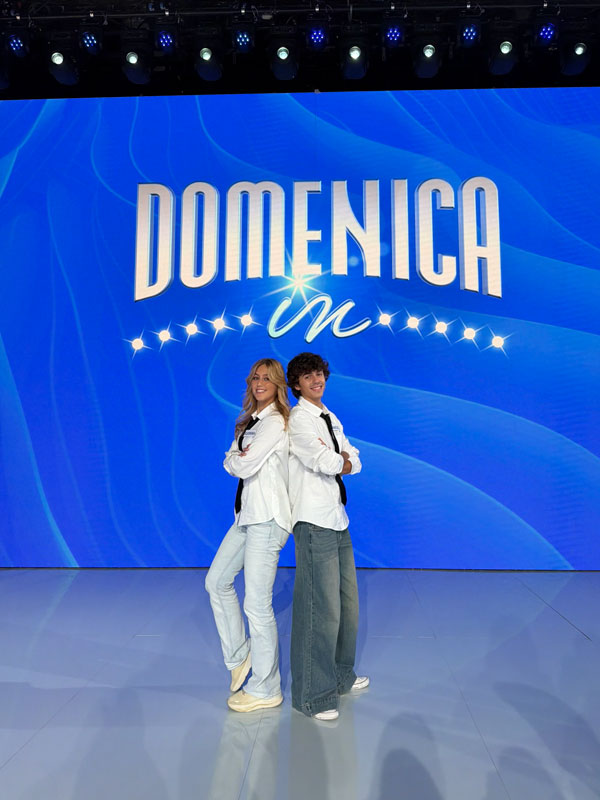
ROME – Mara Venier moved to tears when the cameras stop rolling, two siblings sharing the stage, and a family name with a remarkable musical legacy. Behind Manuel and Eleonora Cicco’s arrival on Domenica In lies much more than a new television opportunity. It is the story of two young artists who grew up surrounded by music and are determined to build their own futures without turning their backs on the past.
He is 21, and she is 28. They are the children of Tony Cicco, a longtime member of Formula 3, the band that helped shape an unforgettable chapter in Italian music history. But Manuel and Eleonora want to be recognized for more than their famous last name. They began performing at a young age, moving from their first shared performances on social media to television appearances, including BellaMa’ on Rai 2, before making their way to Rai’s flagship network.
Today, they are part of the cast of Domenica In, the iconic Italian television show hosted by Mara Venier. For both siblings, this professional opportunity carries a deeply personal meaning. As children, they watched the show on television, dreaming that one day they might step into that very studio themselves.
But it is their relationship with Mara Venier behind the scenes that provides one of the interview’s most touching moments, revealing the genuine and sensitive side of a woman who has formed a special bond with the young artists working alongside her.
Manuel and Eleonora describe a warm, authentic woman who cares deeply about young people and treats everyone working in the studio with respect. They recall a Mara who became emotional and thanked the cast at the end of an episode, away from the applause and bright lights of the live broadcast.
Their conversation also reveals a lesser-known chapter of their lives: the discomfort they experienced during previous television projects, when being the children of a famous musician became a source of judgment and prejudice.
And then there is the music: family memories of Lucio Battisti, the songs that shaped their childhood, and Manuel’s openly expressed dream of one day bringing his talent to the United States.
In this exclusive interview, Manuel and Eleonora Cicco speak candidly, sharing memories, emotions, and reflections on the entertainment industry. From their first encounters with Mara Venier to the expectations attached to their family name, one belief remains constant: music is not simply their profession. It is an essential part of who they are.
Let’s start with this new adventure. When you received the offer to join the cast of Domenica In, what was your first reaction?
Manuel: “For us, it definitely felt like a new beginning. We told ourselves that this time we would make the most of everything we had learned from our past experiences, including our mistakes. We were incredibly excited, especially because Domenica In had never really featured a segment quite like this before. In a way, it’s the debut of an entirely new segment, which also involves a certain amount of risk, so to speak. But we’re ready to take that risk.”
Eleonora: “This opportunity also came at a time when we had reached a different level of maturity.”
Manuel, you’re 21 and Eleonora is 28. You’ve already had television experience on BellaMa’, but now you’re part of Domenica In, one of Italy’s longest-running and most beloved television shows. What did you feel when you walked into that studio for the first time?
Eleonora: “Our experience on BellaMa’ definitely taught us a lot, but making it to Rai’s flagship network was a dream come true. When we were little, we always watched Domenica In. It was one of those shows we dreamed of being part of someday. And, as it happens, we had also dreamed of singing Abbracciame by Andrea Sannino, which is exactly the song we performed during the second episode. It’s a song deeply connected to our Neapolitan roots. It really felt like coming full circle, which made the experience incredibly emotional.”
Everyone knows Mara Venier from television, but you have the opportunity to spend time with her behind the scenes. What is “Aunt Mara” really like when the cameras are off? Is there a funny or unexpected moment that revealed a side of her the audience doesn’t usually see?
Manuel: “I would describe her as genuine. Sometimes, when the cameras stop rolling, people completely change their attitude. We didn’t know what to expect, and, to be honest, we were prepared for that possibility too. Instead, it was even more wonderful to discover what Mara is really like before and after the live broadcast. She’s been incredibly kind and sweet to all of us young performers. She even got emotional because she’s genuinely happy to be surrounded by so many young people. As far as I’m concerned, she’s simply delightful.”
Eleonora: “I have to be honest. Before starting this experience, I had heard quite a few negative opinions about Mara, so we were prepared for just about anything. Instead, she continues to surprise us. Of course, we’re still at the beginning, but I believe the chemistry between people rarely lies. And I think Manuel really found the right word to describe her: Mara is genuine.
One of the things that struck me most is how much importance she places on respect. She doesn’t make distinctions between people. From the young performers to every single crew member, everyone deserves the same consideration. She often repeats one phrase: ‘Respect for everyone.’
That really impressed me because, in the past, we’ve met professionals who talked about respect but behaved completely differently once the cameras were turned off. With Mara, at least so far, I’ve found a remarkable consistency between what she says and what she does.
One moment we can share happened after the second episode. When the cameras were off, Mara became emotional in front of all of us. She thanked everyone and was genuinely happy to be surrounded by so many young people. It was a beautiful and sincere moment.”
Has Mara Venier shared any advice that particularly struck you and that you’ll carry with you?
Eleonora: “During the first episode, while she was interviewing Laura Pausini, Mara said something that seemed very simple but carried a powerful lesson for me: people will talk, talk, and talk, but you have to let them talk.
She expressed it in her own colorful way, with that spontaneity that makes her so recognizable. The message was essentially: ‘I don’t care what people say.’
Because in life, whether you do something right or wrong, there will always be someone ready to criticize you. The important thing is to keep moving forward.”
You belong to a generation that grew up with social media, while Domenica In appeals to a much broader audience, including older generations. In your opinion, which audience is the hardest to win over?
Manuel: “For me, it’s definitely young people. We live in a world that moves incredibly fast, dominated by social media and streaming. We can access almost anything whenever we want, and even Rai has adapted to this transformation with RaiPlay.
That’s why, especially during that time slot, capturing young people’s attention isn’t easy. But we hope the space we’ve been given can shake things up a little and bring younger viewers closer to the show.
Of course, every age group matters, particularly for a broadcaster like Rai, which reaches households throughout Italy and even abroad.”
Eleonora: “I think young audiences have become difficult to win over partly because, in recent years, they’ve grown discouraged by seeing the same familiar faces over and over again on mainstream television, both public and commercial.
Sometimes it feels like television keeps recycling the same ideas and personalities. It’s the same old formula, over and over again.
Young people, on the other hand, want to have their own voice. They want to feel represented.
And I believe that the opportunity Mara is giving us is also a sign of hope. It’s a way of telling young viewers that there’s room for us too!”
You’ve shared so much together, from your first music videos on YouTube to Rai 1. Manuel, what’s it like working with your sister? Eleonora, what’s it like working with Manuel? And, most importantly, when you disagree about an artistic decision, which one of you is more stubborn?
Manuel: “I’ll tell you something that might sound a little paradoxical. When personal relationships are involved, separating your private life from work can sometimes be difficult, and that can affect the quality of what you’re creating.
In our case, though, I actually think we work even better together professionally than we do in everyday life!
Although, come to think of it, we’re incredibly in sync in both areas. We rarely argue, and when a misunderstanding happens, it’s usually over something trivial.
When it comes to work, music, and our artistic projects, we’re almost always on exactly the same wavelength. I honestly struggle to remember a time when we disagreed about our artistic vision.”
Eleonora: “I think that’s partly because we’re so similar. Of course, we have our differences, but when it comes to the way we think and relate to other people, we’re incredibly alike.
And that makes everything easier.
Usually, when you bring several minds together, making decisions becomes more complicated. Everyone has to agree, and the process takes longer. With us, it’s almost the opposite!
We actually find it easier to make decisions together than individually, both in life and at work.
Of course, we still have our little disagreements in everyday life. For example, one thing I absolutely cannot stand about Manuel is that he’s always late!
He makes me drive like crazy. At this point, I’ve practically had to become a Formula 1 driver just to keep us from getting fired from every job we book!” (laughs).
Manuel: “Anyway, to answer your question about who’s more stubborn, I’d say Eleonora definitely wins in everyday life. Artistically, though, I’m probably the one who digs his heels in more often about certain things!”
Let’s talk about your father, Tony Cicco, who helped write an important chapter in Italian music history with Formula 3. Has growing up as the children of a famous musician been more of a privilege, or have you also felt the weight of your family name and other people’s expectations?
Manuel: “We grew up experiencing it as a gift, but a silent gift.
We never truly realized the artistic legacy we had, and still have, right there in our own home. For us, it was simply normal.
It was only when we began entering the music and television industries that we started to understand how significant our family name really was, partly because our colleagues pointed it out to us.”
Eleonora: “We were children, and when you grow up in that kind of environment, everything feels so natural that you don’t realize how fortunate you are.
You assume it’s normal, almost as though everyone grows up the same way.
As we got older, we realized that not everyone had the childhood we did, and we began to understand how much that upbringing and environment had shaped the people we’ve become.
I’m not talking just about our artistic development, but especially about who we are as people.
Having someone with our father’s personality at home was an extraordinary experience that enriched us in so many ways.
It also meant that we didn’t have to experience the kinds of prolonged family absences that, unfortunately, many other young people have to deal with.”
In August, you performed onstage in Fiuggi alongside your father. What did it feel like to share the stage with him once again, in front of an audience familiar with Formula 3’s musical history?
Manuel: “It was an incredible experience, even though it wasn’t the first time we’d performed with our father.
During these concerts, we still have the opportunity to showcase our own artistic identities by performing our original songs. Then, at the end of the show, we all come together onstage to sing the final number.
It’s a beautiful feeling and an enormous privilege, one that we’re becoming increasingly aware of as we grow older.
When we were younger, we didn’t fully understand the significance of these moments. Now we truly appreciate how special they are.”
Eleonora: “And I’ll tell you something else. There’s something I’ve been wanting to get off my chest.
Our last name, which has always felt completely natural to us, has sometimes been made into a burden.
We’ve never flaunted it, but we’ve never denied it either.
And yet, during some of our previous television experiences, particularly with people our own age, we were made to feel uncomfortable about it.
I don’t know what strange assumptions they had made about us, because the truth is that we’ve always stood on our own two feet.
Our father has always taught us the importance of paying our dues and working our way up. He was born in 1949, and I think that says a lot about his mentality and approach to work.
Being able to sing alongside him today and share that stage means reclaiming something we had almost started believing we didn’t deserve.
People had made us feel as though there was something wrong with being Tony Cicco’s children.
But we should be proud of our family, of the father and mother we have. We shouldn’t have to hide who we are.
That’s why performing together onstage felt so liberating, especially after a period when other people had made us feel deeply uncomfortable.”
Manuel, your song SHOW explores broken promises, manipulative relationships, and the freedom to rediscover yourself. What message do you hope reaches young people of your generation?
Manuel: “Above all, I want people not to be afraid to walk away, to turn around and leave when they recognize the first signs of a toxic relationship or manipulation.
I believe the strength of this song lies in its universal message. The lyrics are very direct, but they can apply to different kinds of relationships because abuse and violence don’t happen only in romantic relationships. They can happen in professional environments too.
I hope many people my age can see themselves in this song, but also older listeners, because unfortunately there is no age limit when it comes to becoming a victim of these situations.
The message I want people to take away is simple: don’t stay silent, and don’t accept being mistreated or abused.”
Manuel, you’ve been singing in several languages since you were very young, and you’ve also had artistic experiences connected to Disney Latin America. Would you like to build an international music career, perhaps even in the United States?
Manuel: “Absolutely! You’ve just opened my biggest Pandora’s box, because that’s exactly what I want to achieve!
I love Italy, and I deeply love my roots, but I’d like to become a versatile artist who can express himself and connect with audiences beyond national borders.
I speak several languages, and I want that to be one of my greatest strengths rather than a limitation.
Being able to build a career in the United States one day would be a dream come true.
I wouldn’t see it as an alternative to being successful in Italy, but as something that complements it, because I’d love to sing in different languages and reach audiences around the world.
I think of artists like Laura Pausini and Eros Ramazzotti. They’re our role models for success because they managed to bring Italian music to the rest of the world.”
Eleonora, your father shared the stage and an important part of his career with Lucio Battisti. What has he told you about him?
Eleonora: “There’s something that has always stayed with me: Lucio Battisti passed away just one month before I was born.
My father has told me about it many times, and perhaps, deep down, he likes to believe there’s some kind of connection, as though I carry a little piece of Lucio within me.
One life was ending, and another was beginning.
I like that thought too. I would love to believe that I carry something of him inside me.
Perhaps the fact that Manuel and I chose to continue pursuing our passion for music has brought our father some comfort, because I believe losing a friend like Lucio Battisti left an agonizing, irreplaceable void in his life.
Dad always told us that Lucio was a somewhat enigmatic person.
On one hand, he was an incredible joker, a really funny guy who always had a witty remark ready.
On the other hand, he also experienced moments of deep restlessness and loneliness.
My father used to tell me that when Lucio went shopping at the market, just like anyone else, people would sometimes recognize him and ask, ‘Are you Lucio?’
And he would reply, ‘No, I don’t know him. Who’s that?’
He was someone who believed in doing more with less, with great humility.
For him, music was the only thing that truly mattered.
And that’s the lesson I hope I’ve inherited.
Even in my own songs, like Libra, which might sound lighthearted at first, I try to include something deeper that a more attentive listener might pick up on.
I’m not particularly fond of unnecessary layers or embellishments.
I’d like to build a career where music always remains at the center of everything, without too many distractions.
Today, so much importance is placed on appearance.
And don’t get me wrong, I’m a Libra, so I’m naturally drawn to beauty and aesthetics!
But I believe substance is irreplaceable. It cannot, and should not, be hidden behind anything else.
That’s the lesson I hope to carry with me throughout my life.”
If you could play Mara Venier one song that truly captures who Manuel and Eleonora are, which song would you choose?
Manuel: “The first person who comes to mind is Giorgia, because we practically grew up listening to her music.
I believe a song can tell our story even when its lyrics don’t completely reflect who we are.
Melodies, in my opinion, have an even greater power. They bring back memories and emotions, and they connect deeply with our true selves.
That’s why I’d choose Come saprei by Giorgia.”
Eleonora: “Manuel stole Giorgia from me!
I’m incredibly attached to her music too. But if I had to choose something different, I’d say Quanno chiove by Pino Daniele.”
Two songs, two distinct personalities, and a story that continues to unfold through shared memories and new ambitions.
For Manuel and Eleonora Cicco, their experience on Domenica In represents another milestone in a journey that began long before they stepped in front of Rai 1’s cameras.
It is a journey shaped by their father’s musical legacy, their desire to establish their own voices, and the understanding, gained through difficult experiences, that they should never have to apologize for the family they come from.
Manuel is looking beyond Italy’s borders, dreaming of an international career. Eleonora, meanwhile, champions the importance of artistic substance in an entertainment industry increasingly focused on image.
Yet both seem to share the same belief: talent needs opportunities, but above all, it needs the freedom to express itself without constantly having to prove that it deserves a place.
Perhaps that is the most genuine meaning behind their new television adventure: not living in the shadow of an extraordinary legacy, but finding the courage to create a story of their own.
Discover the Music of Manuel and Eleonora Cicco
To learn more about the siblings’ artistic journeys, listen to their performances, and discover their latest musical projects, visit their channels:
- Eleonora Cicco: Explore her YouTube channel
- Manuel Cicco: Explore his YouTube channel
In esclusiva a Global Event Magazine, Manuel ed Eleonora Cicco raccontano la loro avventura a Domenica In, il lato più autentico di Mara Venier, i pregiudizi vissuti come figli d’arte e gli aneddoti inediti su Lucio Battisti, tra radici musicali e sogni internazionali.
ROMA – Mara Venier che si commuove a telecamere spente, due fratelli che condividono il palco e un cognome importante. Dietro l’arrivo di Manuel ed Eleonora Cicco a Domenica In c’è molto più di una nuova esperienza televisiva: c’è la storia di due giovani artisti cresciuti con la musica in casa e determinati a costruire il proprio futuro senza rinnegare il passato.
Lui ha 21 anni, lei 28. Sono figli di Tony Cicco, storico componente della Formula 3, il gruppo che ha attraversato una stagione indimenticabile della musica italiana. Ma Manuel ed Eleonora non vogliono essere raccontati soltanto attraverso il cognome che portano. Hanno iniziato giovanissimi, passando dalle prime esibizioni condivise sui social alle esperienze televisive, tra cui BellaMa’ su Rai 2, fino all’approdo sulla rete ammiraglia della Rai.
Oggi fanno parte di Domenica In, lo storico programma condotto da Mara Venier. Un’opportunità professionale che per entrambi assume anche un significato profondamente personale: da bambini seguivano la trasmissione in televisione, sognando un giorno di poter entrare in quello stesso studio.
Ma è soprattutto il rapporto con Mara Venier lontano dalle telecamere a regalare uno dei momenti più emozionanti dell’intervista, facendo emergere il lato autentico e sensibile di una donna capace di creare un legame speciale con i giovani artisti che la affiancano.
Manuel ed Eleonora descrivono una donna autentica, attenta ai giovani e al rispetto di tutte le persone che lavorano in studio. Una Mara capace di commuoversi e ringraziare il cast al termine di una puntata, lontano dagli applausi e dalle luci della diretta.
Nella conversazione emerge anche un capitolo meno conosciuto della loro storia: il disagio vissuto in alcune precedenti esperienze televisive, quando essere figli d’arte è diventato motivo di giudizi e pregiudizi. E poi c’è la musica, con i ricordi familiari di Lucio Battisti, le canzoni che hanno segnato la loro crescita e il sogno, dichiarato da Manuel, di portare un giorno il proprio talento anche negli Stati Uniti.
In questa intervista, Manuel ed Eleonora Cicco si raccontano senza filtri, alternando ricordi, emozioni, riflessioni sul mondo dello spettacolo. Dal primo incontro con Mara Venier alle aspettative legate al loro cognome, fino a una certezza che sembra accompagnarli da sempre: la musica non è soltanto una professione, ma una parte essenziale della loro identità.
Partiamo da questa nuova avventura. Quando vi è arrivata la proposta di entrare nel cast di Domenica In, qual è stata la vostra prima reazione?
Manuel: “Sicuramente per noi è stato un nuovo inizio. Ci siamo detti che questa volta avremmo fatto tesoro di tutte le esperienze passate, compresi gli errori. Eravamo emozionatissimi, anche perché a Domenica In non c’era mai stato uno spazio di questo tipo. È un po’ il debutto di una nuova rubrica e rappresenta, tra virgolette, anche un rischio. Ma siamo pronti a correrlo”.
Eleonora: “Questa chiamata è arrivata anche in un momento di maggiore maturità”.
Manuel, tu hai 21 anni ed Eleonora ne ha 28. Avete già vissuto l’esperienza televisiva di BellaMa’, ma oggi fate parte di Domenica In, uno dei programmi più longevi e amati della televisione italiana. Che emozione avete provato entrando per la prima volta in quello studio?
Eleonora: “Sicuramente l’esperienza di BellaMa’ ci ha insegnato tanto, ma arrivare sulla rete ammiraglia della Rai è stato un sogno che si realizza. Da piccoli guardavamo sempre Domenica In, era proprio uno di quei programmi di cui sognavamo di far parte. E, guarda caso, sognavamo anche di cantare Abbracciame di Andrea Sannino, la canzone che abbiamo interpretato durante la seconda puntata. Un brano che si lega profondamente alle nostre radici partenopee. È stato come chiudere un cerchio, per questo l’emozione è stata davvero grandissima”.
Tutti conosciamo Mara Venier attraverso la televisione, ma voi avete la possibilità di viverla anche dietro le quinte. Com’è davvero zia Mara lontano dalle telecamere? C’è un episodio, magari divertente o inaspettato, che vi ha fatto scoprire un lato di lei che il pubblico non conosce?
Manuel: “Io la definirei vera. Spesso capita che, quando si spengono le telecamere, le persone cambino atteggiamento. Non sapevamo cosa aspettarci e, sinceramente, eravamo preparati anche a questa eventualità. Invece è stato ancora più bello scoprire com’è Mara prima e dopo la diretta. Con noi ragazzi è stata carinissima, dolcissima. Si è addirittura commossa, perché è davvero felice di essere circondata da tanti giovani. Per quanto mi riguarda, la definirei semplicemente deliziosa”.
Eleonora: “Devo essere sincera: prima di iniziare questa esperienza avevo sentito tanti pareri negativi su Mara, quindi eravamo un po’ pronti a tutto. Invece continua a sorprenderci. Certo, siamo ancora all’inizio, ma credo che la chimica tra le persone difficilmente sbagli. E forse Manuel ha trovato davvero l’aggettivo giusto: Mara è vera. Una delle cose che mi ha colpito maggiormente è l’importanza che attribuisce al rispetto. Non fa distinzioni tra le persone: dai giovani artisti fino all’ultimo addetto ai lavori, per lei tutti meritano la stessa considerazione. Ripete spesso una frase: “Rispetto per tutti”. È qualcosa che mi ha colpita profondamente, perché in passato ci è capitato di incontrare professionisti che parlavano di rispetto, ma poi, a telecamere spente, si comportavano in maniera completamente diversa. In Mara, almeno fino a oggi, ho trovato una grande coerenza tra ciò che dice e ciò che fa. Un episodio che possiamo raccontare è accaduto dopo la seconda puntata. A telecamere spente, Mara si è commossa davanti a tutti noi. Ci ha ringraziati, era davvero felice di essere circondata da tanti ragazzi. È stato un momento molto bello e sincero”.
C’è un consiglio di Mara Venier che vi ha particolarmente colpito e che porterete con voi?
Eleonora: “Durante la prima puntata, mentre intervistava Laura Pausini, Mara ha detto una cosa apparentemente molto semplice, ma che per me racchiude un grande insegnamento: la gente parla, parla, parla, ma bisogna lasciarla parlare. Lo ha detto anche in maniera piuttosto colorita, con quella spontaneità che la contraddistingue. Il senso era: “A me non interessa quello che dice la gente”. Perché, nella vita, che tu faccia bene o faccia male, ci sarà sempre qualcuno pronto a parlare. L’importante è andare avanti”.
Appartenete a una generazione cresciuta con i social, mentre Domenica In si rivolge a un pubblico molto più ampio, anche dal punto di vista anagrafico. Secondo voi, qual è il pubblico più difficile da conquistare?
Manuel: “Per me sono proprio i giovani. Viviamo in un mondo che corre velocissimo, dominato dai social e dallo streaming. Ormai abbiamo tutto a disposizione quando vogliamo, e anche la Rai si è adattata a questa trasformazione con RaiPlay. Per questo, soprattutto in quella fascia oraria, riuscire a catturare l’attenzione dei ragazzi non è semplice. Speriamo però che lo spazio che ci è stato dedicato possa dare una sorta di scossa, avvicinando anche i più giovani al programma. Naturalmente tutte le fasce di pubblico sono importanti, soprattutto per una realtà come la Rai, che entra nelle case di tutti, anche all’estero”.
Eleonora: “Credo che i giovani siano diventati difficili da conquistare anche perché, negli ultimi anni, sono stati un po’ scoraggiati dal vedere sempre gli stessi volti sulle reti generaliste, sia pubbliche sia private. A volte sembra di assistere a un continuo riproporsi di cose già viste, il solito calderone di trito e ritrito. I giovani, invece, hanno voglia di avere una voce propria, di sentirsi rappresentati. E credo che uno spazio come quello che Mara ci sta offrendo sia anche un segnale di speranza. È come dire ai ragazzi che ci guardano che c’è posto anche per noi!”.
Insieme avete condiviso tantissimo, dai primi video musicali su YouTube fino a Rai 1. Manuel, com’è lavorare con tua sorella? Eleonora, com’è lavorare con Manuel? Soprattutto, quando non siete d’accordo su una scelta artistica, chi dei due è più testardo?
Manuel: “Ti dirò una cosa che forse può sembrare paradossale. Quando entrano in gioco i rapporti personali, a volte è difficile separare la vita privata dal lavoro e questo può influire anche sul risultato di ciò che si sta creando. Nel nostro caso, invece, credo che sul lavoro funzioniamo addirittura meglio che nella vita di tutti i giorni! Anche se, a pensarci bene, siamo molto simbiotici in entrambi gli aspetti. Litighiamo raramente e, quando capita qualche incomprensione, si tratta sempre di sciocchezze. Sul lavoro, sulla musica e sulle nostre attività artistiche siamo praticamente sempre sulla stessa lunghezza d’onda. Faccio davvero fatica a ricordare un momento in cui siamo stati in disaccordo sulla nostra visione artistica”.
Eleonora: “Credo che questo dipenda anche dal fatto che siamo molto simili. Abbiamo le nostre differenze, certo, ma nel modo di ragionare e di rapportarci agli altri ci somigliamo tantissimo. E questo rende tutto più semplice. Di solito, quando si mettono insieme più teste, prendere una decisione diventa complicato: bisogna trovare un accordo e i tempi si allungano. Con noi succede quasi il contrario! Ci viene più facile decidere insieme che singolarmente, sia nella vita sia nel lavoro. Poi, naturalmente, nella quotidianità qualche piccola incomprensione c’è. Per esempio, una cosa che proprio non sopporto di Manuel è che è un ritardatario cronico! Mi fa fare delle corse assurde in macchina. Ormai sono dovuta diventare una pilota di Formula 1 per evitare che ci caccino da tutti i contratti che prendiamo!» (ride).
Manuel: “Comunque, se vogliamo rispondere proprio alla domanda su chi sia più testardo, direi che nella vita di tutti i giorni lo è Eleonora. Artisticamente, invece, a volte sono io quello che si impunta di più su certe cose!”.
Parliamo un po’ di vostro padre, Tony Cicco, che con la Formula 3 ha contribuito a scrivere una pagina importante della musica italiana. Essere figli d’arte è stato soprattutto un privilegio oppure avete sentito anche il peso di un cognome importante e delle aspettative degli altri?
Manuel: “Siamo cresciuti vivendo tutto questo come un dono, ma un dono silenzioso. Non ci siamo mai resi davvero conto del patrimonio artistico che avevamo, e che abbiamo ancora, in casa. Per noi era semplicemente la normalità. Soltanto quando abbiamo iniziato ad affacciarci al mondo artistico e televisivo, anche attraverso le parole dei colleghi, abbiamo cominciato a comprendere quanto fosse importante il nostro cognome”.
Eleonora: “Eravamo piccoli e, quando cresci in un ambiente del genere, vivi tutto con una naturalezza tale da non renderti conto della fortuna che hai. Ti sembra normale, quasi come se tutti vivessero la stessa esperienza. Crescendo, invece, abbiamo capito che non tutti hanno avuto un’infanzia come la nostra e quanto quel tipo di educazione e di ambiente sia stato fondamentale per diventare le persone che siamo oggi. Non parlo soltanto dal punto di vista artistico, ma soprattutto umano. Avere in casa una personalità come quella di nostro padre è stata un’esperienza davvero particolare, che ci ha arricchiti tantissimo. E ci ha anche permesso di non vivere quelle grandi assenze familiari che, purtroppo, tanti altri ragazzi conoscono”.
Ad agosto siete saliti sul palco a Fiuggi insieme a vostro padre. Davanti a un pubblico che conosce la storia musicale della Formula 3, che emozione avete provato nel condividere ancora una volta il palco con lui?
Manuel: “Guarda, è stata una grandissima emozione, anche se non era la prima volta che salivamo sul palco con nostro padre. Durante questi concerti abbiamo comunque la possibilità di presentare la nostra identità artistica, portando i nostri brani. Poi, alla fine, saliamo tutti insieme sul palco per cantare l’ultimo pezzo. È un’emozione bellissima, una fortuna immensa della quale ci rendiamo conto sempre di più. Prima eravamo molto più inconsapevoli, mentre oggi, crescendo, comprendiamo davvero il valore di questi momenti”.
Eleonora: “E ti dirò, voglio anche togliermi un sassolino dalla scarpa. Il nostro cognome, che per noi è sempre stato qualcosa di assolutamente naturale, ci è stato fatto pesare parecchio. Non lo abbiamo mai ostentato, ma nemmeno negato. Eppure, in alcune esperienze televisive del passato, soprattutto da parte di nostri coetanei, ci è stato fatto pesare tantissimo. Non so quali strane idee si fossero fatti su di noi, quando in realtà abbiamo sempre camminato con le nostre gambe. Nostro padre ci ha sempre insegnato il valore della gavetta. È nato nel 1949, quindi credo che questo dica già molto della sua mentalità e del suo modo di vivere il lavoro. Riuscire oggi a cantare insieme a lui, a condividere quel palco, per noi significa anche riprenderci qualcosa che, a un certo punto, avevamo quasi iniziato a credere di non meritare. Ci avevano fatto sentire come se ci fosse qualcosa di sbagliato nell’essere figli di Tony Cicco. Invece dobbiamo essere fieri della famiglia che siamo, del padre e della madre che abbiamo. Non dobbiamo nasconderci. Per questo cantare insieme sul palco è stata anche una bellissima liberazione, dopo un periodo in cui ci hanno fatto sentire molto a disagio”.
Manuel, nel tuo brano SHOW affronti il tema delle promesse disattese, dei rapporti manipolatori e della libertà di ritrovare se stessi. Quale messaggio vorresti arrivasse ai ragazzi della tua generazione?
Manuel: “Assolutamente quello di non avere paura di andarsene, di girare i tacchi quando si riconoscono i primi segnali di un rapporto tossico o di una manipolazione. Credo che la forza di questo brano stia proprio nel suo messaggio universale. Il testo è molto esplicito, ma può riferirsi a diversi tipi di relazioni, perché gli abusi e le violenze possono verificarsi non soltanto nei rapporti sentimentali, ma anche in quelli lavorativi. Penso e spero che tanti ragazzi della mia generazione possano riconoscersi in questa canzone, ma anche persone più grandi, perché purtroppo non esiste un’età per diventare vittime di situazioni del genere. Il messaggio che vorrei arrivasse è soprattutto questo: non rimanere in silenzio e non accettare di continuare a subire”.
Manuel, fin da giovanissimo hai cantato in diverse lingue e hai vissuto esperienze artistiche legate anche a Disney Latin America. Ti piacerebbe costruire una carriera musicale internazionale, magari anche negli Stati Uniti?
Manuel: “Assolutamente sì! Guarda, con questa domanda scoperchi il mio più grande vaso di Pandora, perché è proprio questo il mio obiettivo! Amo l’Italia, amo profondamente le mie radici, ma vorrei diventare un artista poliedrico, capace di esprimersi e farsi conoscere anche oltre i confini nazionali. Parlo diverse lingue e voglio che questa caratteristica diventi uno dei miei punti di forza, non un limite. Riuscire un giorno a costruire una carriera anche negli Stati Uniti sarebbe un sogno. Non lo vedrei come un’alternativa al successo in Italia, ma come qualcosa di complementare, perché mi piacerebbe cantare in più lingue e raggiungere pubblici diversi. Penso ad artisti come Laura Pausini ed Eros Ramazzotti: sono loro i nostri modelli di successo, perché hanno saputo portare la musica italiana nel mondo”.
Eleonora, tuo padre ha condiviso il palco e una parte importante della sua carriera con Lucio Battisti. Che cosa ti ha raccontato di lui?
Eleonora: “C’è una cosa che mi ha sempre accompagnata: Lucio Battisti se n’è andato proprio un mese prima che io nascessi. Mio padre me l’ha raccontato tante volte e forse, in cuor suo, gli piace pensare che ci sia una sorta di legame, come se io portassi dentro qualcosa di Lucio. Una vita finiva e un’altra iniziava. È un pensiero che piace anche a me. Mi piacerebbe davvero avere dentro qualcosa di lui. Forse il fatto che io e Manuel abbiamo scelto di portare avanti questa passione per la musica può aver rincuorato nostro padre, perché credo che la perdita di un amico come Lucio Battisti abbia lasciato in lui un vuoto straziante, incolmabile. Papà ci ha sempre raccontato che Lucio era un personaggio un po’ enigmatico. Da una parte era un grandissimo barzellettiere, un simpaticone, sempre con la battuta pronta. Dall’altra, però, aveva anche momenti di profonda inquietudine e solitudine. Mi raccontava, per esempio, che quando andava al mercato a fare la spesa, come una persona qualsiasi, capitava che qualcuno lo riconoscesse e gli chiedesse: “Ma tu sei Lucio?”. E lui rispondeva: “No, non lo conosco. Chi è?”. Era un uomo che lavorava moltissimo per sottrazione, con grande umiltà. Per lui contava soltanto la musica. Ed è proprio questo l’insegnamento che spero di aver ereditato. Anche nei miei brani, come Libra, che a un primo ascolto può sembrare una canzone leggera, cerco di inserire qualcosa che possa arrivare a chi ascolta con maggiore attenzione. Non amo particolarmente le sovrastrutture. Vorrei costruire una carriera in cui sia sempre la musica a occupare il centro della scena, senza troppi fronzoli. Oggi si dà tantissima importanza all’estetica. E attenzione, io sono della Bilancia, quindi esteta per natura! Però credo che la sostanza sia insostituibile. Non può e non deve essere mascherata da nient’altro. Ecco, questo è l’insegnamento che spero di portare sempre con me”.
Se poteste far ascoltare a Mara Venier una canzone che racconti davvero chi sono Manuel ed Eleonora, quale scegliereste?
Manuel: “A me viene subito in mente Giorgia, perché siamo praticamente cresciuti ascoltando la sua musica. Credo che a volte una canzone possa raccontarci anche quando il testo non rispecchia completamente ciò che siamo. Le melodie, secondo me, hanno un potere ancora più forte: evocano ricordi, emozioni e riescono a connettersi profondamente con la nostra essenza. Per questo sceglierei Come saprei di Giorgia”.
Eleonora: “Manuel mi ha rubato Giorgia! Anch’io sono legatissima a lei. Però, dovendo scegliere un’alternativa, direi Quanno chiove di Pino Daniele”.
Due canzoni, due sensibilità e una storia che continua a intrecciarsi, tra ricordi familiari e nuove ambizioni.
Per Manuel ed Eleonora Cicco, l’esperienza a Domenica In rappresenta un’altra tappa di un percorso cominciato molto prima delle telecamere di Rai 1. Un percorso in cui convivono l’eredità musicale del padre, il desiderio di affermarsi con la propria voce e la consapevolezza, maturata anche attraverso esperienze difficili, di non dover chiedere scusa per la famiglia da cui provengono.
Manuel guarda oltre i confini italiani e sogna una carriera internazionale. Eleonora rivendica il valore della sostanza in un mondo dello spettacolo sempre più attento all’immagine. Entrambi, però, sembrano condividere la stessa convinzione: il talento ha bisogno di occasioni, ma soprattutto della libertà di esprimersi senza dover dimostrare continuamente di meritare il proprio posto.
Il senso più autentico della loro nuova avventura televisiva è proprio questo: non vivere all’ombra di una storia importante, ma trovare il coraggio di scriverne una propria.
Per conoscere meglio il percorso artistico dei due fratelli, ascoltare le loro interpretazioni e scoprire i loro progetti musicali, ecco dove seguirli.
- Eleonora Cicco: Scopri il suo canale YouTube
- Manuel Cicco: Scopri il suo canale YouTube